describe the image

Subscribe by Email

Your email:

Browse by Tag

Follow Me

IMA's Implementing Organizational Changes at Speed Blog

Current Articles | RSS Feed RSS Feed

The Business Case for a Change Management Methodology


Imagine you are a business leader weighing strategic options.  You evaluate the costs versus benefits of implementing a new enterprise-wide strategy that will build efficiencies, address global competition, improve the customer experience, re-structure operations, or reduce costs.  Whichever option or combination of options prospectively appear to drive the greatest financial return, you can protect that investment and significantly increase the likelihood you will be able to implement on time, on budget, and achieve all your objectives—all at a relatively small cost.  From a bottom line perspective, isn’t organization change management a “no-brainer?”

 Why Do Data-Based Leaders Ignore the Data?

There is a strong business case to be made for applying organization change management with articles about the financial benefits in business publications like McKinsey’s Quarterly.  There’s also plenty of dismal financial data about the success rate of implementations that would theoretically lead any rational leader to the same conclusion:

Organization change management is an essential component of any planned implementation.

Yet why is the data ignored so often by leaders who are data-driven in every other area of the business? 

We can only speculate that part of the reason is that many change management methodology approaches are just not “business-driven” and therefore, leaders don’t see the solutions as a relevant protocol in the same way that they view Lean/Six Sigma or even investing in organization change managementproject management.  

The inherent skepticism is reinforced by internal change agents who fail to focus their discussions with leaders on the three things that every leader or sponsor really is interested in:

  • Can I get this done faster?
  • Can I get it done better?
  • Can I get it done cheaper?

As change practitioners, we must be mindful of the Frame of Reference of leaders, and stop approaching them from our own perspective and speak in theirs.

How to Change the Mind-Set of Leaders

Given this reality, what can internal change agents do to shift the mindset of leaders?

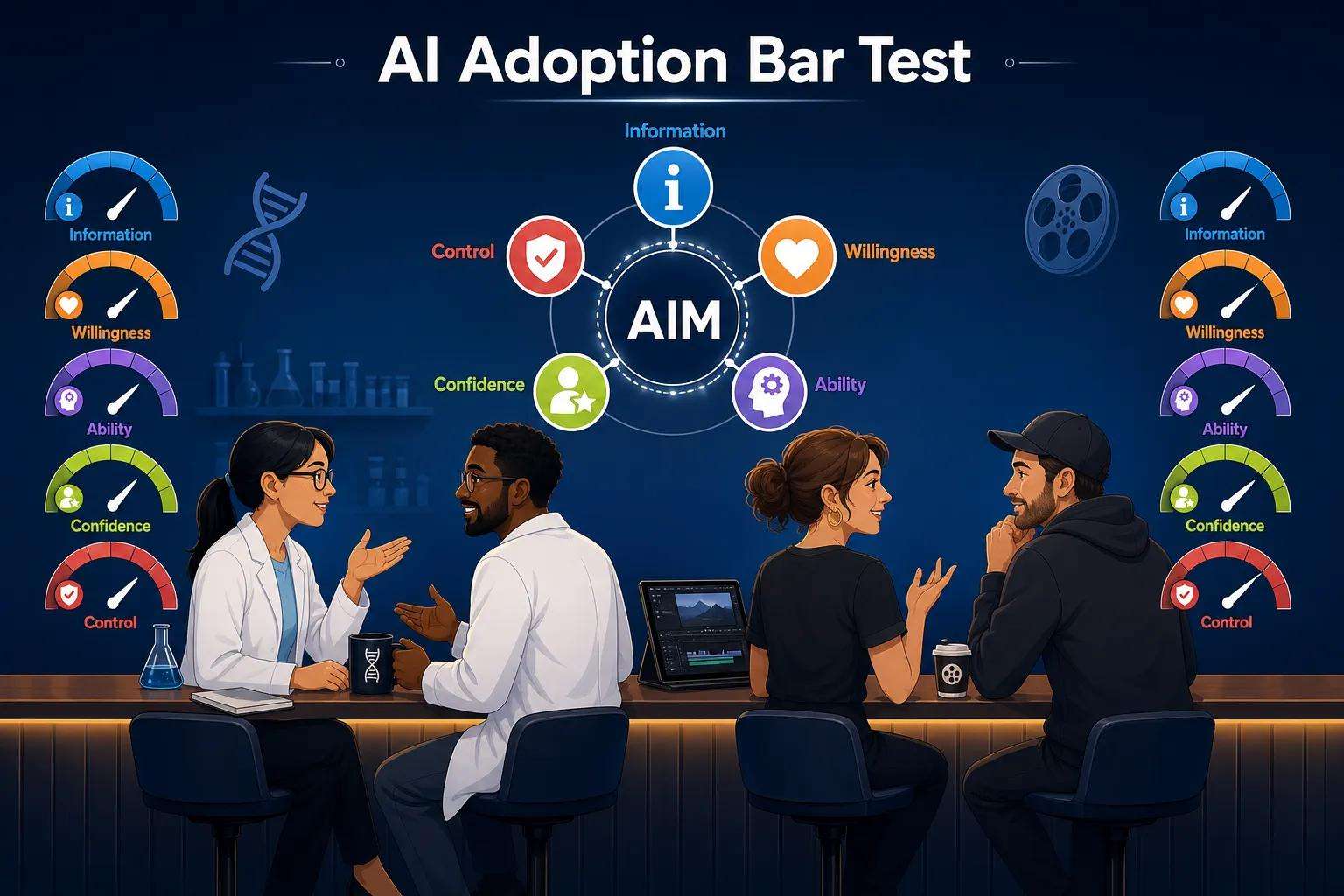
1.  Implement a business-driven change management methodology (like AIM) that‘s practical and aligns with the language and objectives of leaders.  While this may sound self-serving, it’s a fact that leaders will respond more positively to a systematic, business-driven change approach with clear success metrics.

2.  Focus discussions on the need to build internal capability to implement, and offer a systematic plan for getting to that end-goal.  This makes up-skilling your change management capability an investment, rather than a cost.

3.  Use data as the foundation of your discussions with leaders whenever possible.  Data is the language of business!

4.  Apply a systematic “sponsor-contracting” process as the framework for your discussions, keeping in mind that “better, faster, cheaper” is the Frame of Reference of your leaders. Take out “soft” language like “I need your support” from your requests.

5.  Focus on the rationale of one change management methodology as a model for the desired end-state of the initiatives (i.e., if you are seeking to operate as “one company” based on best practices it just makes sense that applying one framework to get there will build efficiencies and speed.)

6.  Track the success rate of changes against the key metrics of on-time, on budget, all business, technical, and human objectives met.  Educate your leaders that the end-goal of strategic changes is “implementation,” not “installation.”

ivi


Can a Change Management Methodology Bridge the IT-Business Divide?


What's the role of a change management methodology in building the IT-business partnership?  It’s typical for strategic initiatives to include some type of technology component.  The question is, who owns the initiative?  Does ownership shift at some point in the project life cycle? 

The reality is that IT can’t be solely accountable for implementation success, and accountability must be shared between IT and the business.

Your change management methodology needs to unite both sides and create a bridge between IT and the business.  If both groups share a common methodology, you can move much more swiftly.

And speed is the currency of success in today's marketplace.

IT is Accountable for Installation

In the early stages of the project life cycle, IT is the driver of the technology selection, analysis, design, and testing processes.  Clearly the business end-users must be part of the process.  Together, the IT and business owners define the business requirements and design a system that meets the business needs. The business owners must start to build readiness for the change by communicating a compelling business case for action and getting the concerns of users out in the open so early resistance to change can be managed.

new technologyIT then takes the lead in making sure the system is “up and running” and meets the “go live” target date.  This is what we term “installation,” and it’s a critical step in implementation. 

However, when you stop at the point of installation, you are still short of achieving sustained adoption and Return on Investment.  And even though the IT project responsibilities are essentially completed at the point of installation, the project is not yet complete until you overcome the barriers to change and get users to adopt the new behaviors. This responsibility falls squarely on the shoulders of the business.

Business Partner Accountability

While it’s typical for the project team to be disbanded at this point, the project is in fact not yet complete.  Business partners, or what we term the reinforcing sponsors, must consistently and actively express, model, and reinforce the new behaviors, and you can teach them what good sponsorship requires. IT is in no position to address the necessary modeling and reinforcement because they have no positional authority over the users (or what we call Targets). 

Providing the appropriate reinforcements is the most important of all business partner (sponsor) responsibilities.  Reinforcing sponsors should be applying three essential types of reinforcements at the right time and at the appropriate level of intensity. These can be categorized as positive reinforcement, negative consequences, and degree of work effort.

Most Reinforcing sponsors understand that there is power in positive reinforcement.  It’s much more difficult, though, to apply negative consequences for undesirable behaviors.  For many organizations, corporate cultural norms are powerful influencers of sponsor actions, meaning that it’s culturally unacceptable for business partners to provide direct negative feedback to a Target.  It’s simply not done. 

Few reinforcing sponsors understand the role of controlling work effort in driving implementation.  How difficult is it for Targets to use the system to perform work in the old ways?  Is the old system still available?  Are “work-arounds” acceptable”?  While IT can be helpful in ensuring that these work effort issues are addressed, the accountability rests primarily with business partners.

By building a partnership based on shared accountability and using a repeatable and systematic framework like the Accelerating Implementation Methodology (AIM) for managing the people elements of the change, project teams are far more likely to be positioned for full value realization.

ivi

Change Management Methodology Overview: Change the Change or Change the Culture


Creating a Cultural Fit is an important element of the AIM change management methodology. Your organization’s culture is arguably your greatest strategic asset.  Your competition can potentially match your product or service.  Competition can create a marketing strategy that’s equally powerful.  But no competition will have your culture

Your corporate culture is the collective pattern of values, behaviors, and unwritten rules of your organization—it’s the collective frame of reference for your organization.  And whenculture change image it comes to implementation of major business changes, the consistency of that change within the corporate culture can predict the probability of implementation success. 

Unwritten Rules are Most Powerful

We all recognize that our organizations have unique aspects to them which we can term the "corporate culture."  The culture includes:

  • Behaviors- how we operate
  • Values- guidelines for the decisions we make
  • Unwritten rules- “the way we do things around here”

In a successful organization, values are consistently expressed, modeled, and reinforced.  When the there is a mismatch or lack of alignment between the “walk,” the “talk,” and the reinforcement from leaders, there is less confidence and trust.  In terms of implementation, this lack of trust impacts the speed and resources required for successful implementation. 

Low Trust= Low speed, more resources needed

High Trust= High speed, fewer resources needed

Remember that reinforcement has the greatest impact on the successful outcome of your change, and when there is a mismatch between what is expressed, modeled, and reinforced, you can expect confusion and less readiness for the change. 

While values are important, it’s the unwritten rules that are the most powerful determinant of culture.  So powerful, in fact, that if your change is inconsistent with the culture, you ultimately will be faced with two choices—either change the change, so that is consistent, or change the culture, which is a long and very difficult process. 

Changing the Culture is a Difficult Proposition

Don’t go up against your organizational culture without a business imperative to do so, because you can expect lots of resistance.  There are many reasons why culture change is so difficult.  First, leaders will be inclined to reinforce the culture that made them successful in the first place—culture is self-reinforcing! So consequently you can expect a lot of resistance from the leaders themselves (as we say, you can expect the greatest resistance from those that have the highest investment in things remaining the same.) 

If changing the culture still makes good business sense, be prepared to:

  • Re-define what success looks like, and build an implementation plan with the appropriate reinforcements for the new behaviors
  • Make certain that you have powerful Sponsors who are actively committed to the change (not just lip-service)
  • Develop skilled Change Agents who can support the culture change.  If you have too few Agents, or don’t have credibility and influence in the right areas of the organization, your chances for success will be minimal

Culture change requires more than a vision of the future state—you need a solid implementation plan that includes specific plans for building Sponsorship, Readiness, Reinforcement, Communication, and Change Agents.  

enterprise-wide-change-cta

All Posts