describe the image

Subscribe by Email

Your email:

Browse by Tag

Follow Me

IMA's Implementing Organizational Changes at Speed Blog

Current Articles | RSS Feed RSS Feed

Change-Adept Organizations: Your Change Management Methodology's Role


Can a change management methodology be the single solution to creating a change-adept organization?  You might be surprised to learn that we would say no!  

Organizations that are looking to survive and even thrive in a volatile economic environment recognize that being “change-adept” is more critical than ever.  We all know that there is virtually an epidemic of change in organizations today.  At the same time, there is not enough attention being paid to how to actually implement all those changes. Practically speaking, we need to clarify how to get from “here to there.” And it requires multiple capabilities, "including but not limited to" a change management methodology!

As a first step, it’s helpful to identify four distinct organization capabilities that are requirements for a change-adept organization.  Combined together, these capabilities:

  • provide the skill and structure required to identify problems and improvement opportunities
  • technically implement solutions in a cost-effective and efficient
    manner
  • manage all aspects of the implementation including the human and cultural elements
  • provide the organizational support needed for implementation success

Capability 1:  Provide Statistical Analyses for Problem Identification

Application of problem-solving processes like Lean Sigma are extremely useful in identifying improvement opportunities and providing a common language and approach. While this capability is extremely useful, it is not a silver bullet for driving innovation and continuous improvement into the organization.  It does, however, provide a data-based approach that can help prioritize and focus on those areas that will deliver greater efficiencies and improved productivity.

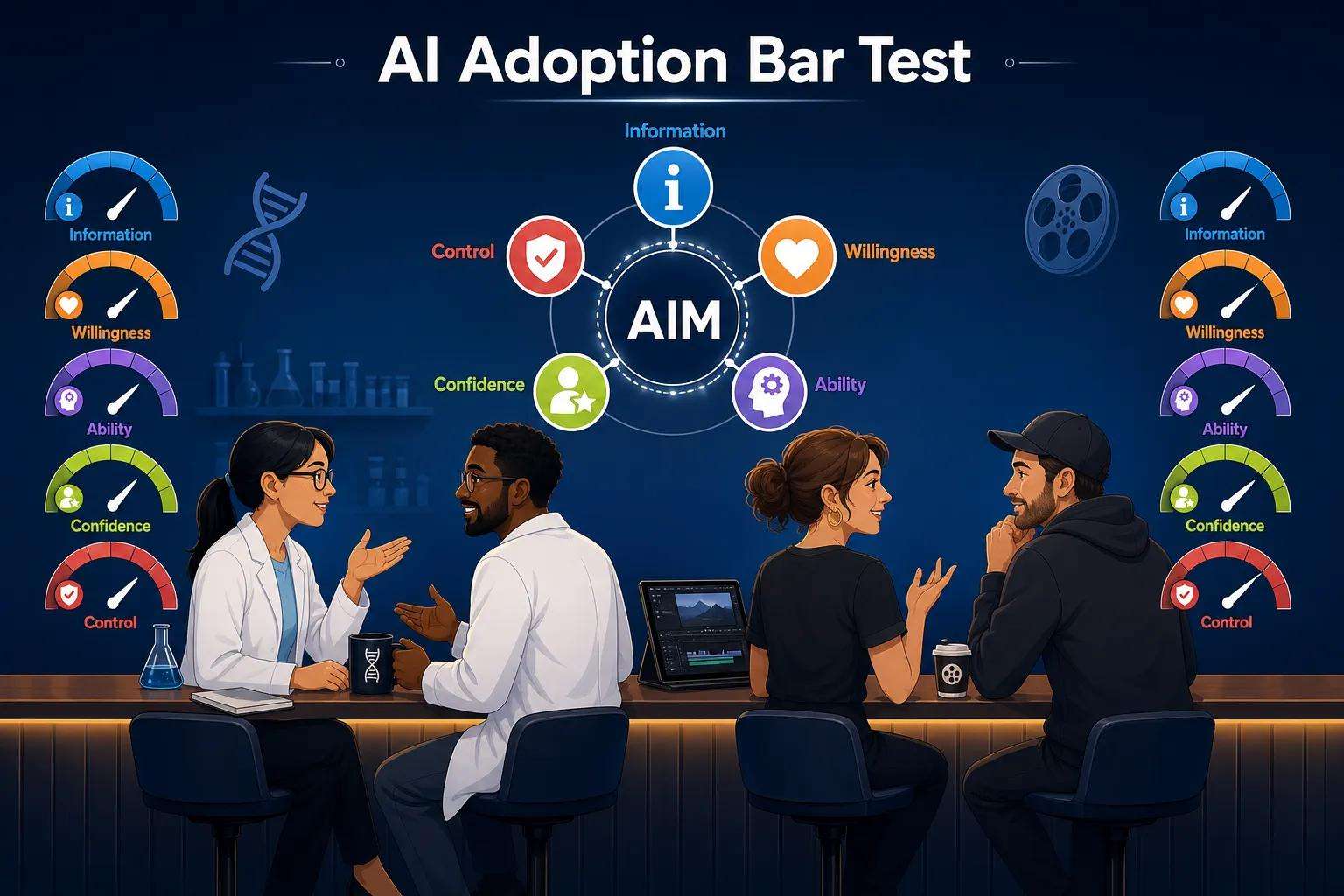
What these statistical analyses approaches lack is the discipline and rigor around the implementation of the solution. That's the benefit of overlaying the AIM (Accelerating Implementation Methodology) change management methodology on top of Lean Six Sigma.

Capability 2:  Apply Project Management Discipline

The first capability that a change-adept organization needs is an explicit project management methodology, supported by a skilled-cadre of project and program managers.  Project management discipline enables the organization to ensure there is a plan that will manage resources, identify risks, control costs, and increase the likelihood that the project is completed on time.  Change-adept organizations are also implementing enterprise-wide teams that have a broad view of how best to prioritize work efforts across multiple initiatives.

Along these same lines, change-adept organizations also need a view of the portfolio ofportfolio change agenda change.  Many of the organizations we see really don't know where all their resources are going and decisions about what projects to take on are not being made in a strategic way. A change-adept organization has the governance and structure in place to manage change at the system and local levels.  

Capability 3:  Build AIM Expertise to Manage the Human and Cultural Change Elements

By definition, a change-adept organization must be able to implement quickly.  Organizations that see the business value in becoming change-adept will benefit greatly from a systemic and systematic structured implementation framework exemplified by the AIM change management methodology.  Absent a common framework for managing the human and cultural elements of strategic initiatives, organizations are far more likely to take too long, spend too much, and increase the likelihood that desired changes are not sustained over time.

Capability 4:   Have a Network of Internal Consultants with Credibility and Influence

The change-adept organization must have a network of individuals with the competence and credibility to support implementation at the local level.  It is critically important that you select these individuals based on a set of specific traits and characteristics (see IMA’s Change Agent Assessment tool for guidance.)  These individuals must also be located in the right places and in sufficient numbers to support the organizational changes, and have credibility with both leaders and targets.

These four capabilities are the cornerstones for building a change-adept organization.  Each is critically important, but alone is insufficient. Combined together, supported by the right kind of active Sponsorship, these capabilities can help your organization drive competitive advantage, shareholder value, and long-term success.


Build Change Capability with a Change Management Methodology


Does your organization see the value in increasing your change management capability in 2013? Can a change management methodology be the single solution to creating a change-adept organization?

Organizations that are looking to survive and even thrive in a volatile economic environment recognize that being “change-adept” is more critical than ever.  Practically speaking, however, we need to clarify how to get from “here to there.” And it requires multiple capabilities, "including, but not limited to" having an enterprise-wide change management methodology!

As a first step, it’s helpful to identify four distinct organization capabilities that are requirements for a change-adept organization.  Combined together, these capabilities:

  • provide the skill and structure required to identify problems and improvement opportunities
  • technically implement solutions in a cost-effective and efficientchange-adept organizations manner
  • manage all aspects of the implementation including the human and cultural elements
  • provide the organizational support needed for implementation success

Capability 1:  Provide Statistical Analyses for Problem Identification

Application of problem-solving processes like Lean Sigma are extremely useful in identifying improvement opportunities and providing a common language and approach. While this capability is extremely useful, it is not a silver bullet for driving innovation and continuous improvement into the organization.  It does, however, provide a data-based approach that can help prioritize and focus on those areas that will deliver greater efficiencies and improved productivity.

Capability 2:  Apply Project Management Discipline

The first capability that a change-adept organization needs is an explicit project management methodology, supported by a skilled-cadre of project and program managers.  Project management discipline enables the organization to ensure there is a plan that will manage resources, identify risks, control costs, and increase the likelihood that the project is completed on time.  Change-adept organizations are also implementing enterprise-wide teams that have a broad view of how best to prioritize work efforts across multiple initiatives.

Capability 3:  Build AIM Expertise to Manage the Human and Cultural Change Elements

By definition, a change-adept organization must be able to implement quickly.  Organizations that see the business value in becoming change-adept will benefit greatly from a systemic and systematic structured implementation framework exemplified by the AIM (Accelerating Implementation Methodology) change management methodology.  Absent a common framework for managing the human and cultural elements of strategic initiatives, organizations are far more likely to:

  • take too long
  • spend too much
  • increase the likelihood that desired changes are not sustained over time

Capability 4:   Have a Network of Internal Consultants with Credibility and Influence

The change-adept organization must have a network of individuals with the competence and credibility to support implementation at the local level.  It is critically important that you select these individuals based on a set of specific traits and characteristics (see IMA’s Change Agent Assessment tool for guidance.)  These individuals must also be located in the right places and in sufficient numbers to support the organizational changes, and have credibility with both leaders and targets.

These four capabilities are the cornerstones for building a change-adept organization.  Each is critically important, but alone is insufficient. Combined together, supported by the right kind of active Sponsorship, these capabilities can help your organization drive competitive advantage, shareholder value, and long-term success.

  CTA-free-demo-lg

Change Management Methodology Value: A Leadership Perspective


How do leaders assess the value of a change management methodology?  

That was perhaps the most intriguing and important session at last week's first-ever NW Change Alliance conference.  The conference brought together change management practitioners at a wide variety of organizations in the Northwest region.  The leadership panel represented top leaders at Nike, Kaiser-Permanente, Bonneville Power, and the Bill and Melinda Gates Foundation.

Many of the leadership "asks" for change management were the very same characteristics and benefits we talk about as elements of the AIM (Accelerating Implementation Methodology) change management methodology.  

But first, from a leadership perspective, what did these individuals see as the value of the investment?

Across the board, the stimulus for the investment was a project or projects that didn't deliver on the intended business case.  In the case of one of the organizations, the failure resulted in millions of dollars of write-offs.  That definitely got the attention of executives, who recognized that they had not invested enough on the people-side.

Each of these organizations have experienced, and continue to experience major change.  All of the leaders understood that "big changes take time."  So what was on the wish list for these leaders when it came to a change management methodology?

1.  The methodology application needs to have a "project" focus rather than a cultural focus.  We have to be able to demonstrate that the methodology accomplishes three things:

  • We get the intended ROIrationale for investing in change management for the project
  • The methodology enables us to manage risks better
  • We are able to "engage" our people, so that we are more innovative and creative as an organization

2.  We would like to have a change management methodology that enables us to provide the organization with an "integrated set of practices;"  this means that Lean, Project Management, and Change Management (or what this organization terms "Transistion Management") work harmoniously together.  

3.  We need a plan that has "measurable outcomes."  The need for measurement was mentioned several times-- including the need to be able to measure change saturation through heat mapping.  Leaders want better data to be able to then make better decisions on sequencing.

4.  Along the same lines, when change management practitioners go to leaders they need to speak the language of leaders, not the language of "change management."  Leaders are very interested in building "change agility", but their primary focus is on building the business process that drives the results.  So their focus is on how change management can enable them to accomplish business results!

5.   Leaders agreed that their goal was simple in statement, but much more complex in execution.  Simply put, they said, "Give me the change, without the disruption."  They are looking for tools and processes that are more "digestible" and help the organization better deal with "change saturation."

The good news is that AIM delivers on all five items on this leadership wish-list:

1.  AIM is a change management methodology that has a project focus.  We consistently tell our clients that it is much more effective to deploy AIM on a project by project basis rather than as a general "cultural ethos."  

2.  AIM is designed to be "unbundled" and integrated into other protocols, such as Lean, project management, and quality initiatives.  At its most mature level, AIM doesn't even exist independently but just becomes the way that things are done in the organization.

3.  AIM is measurement and business-focused.  The robust measurement diagnostics enable users to have data around project risks, quality of sponsorship, change agent capability, and change readiness.  Heat-mapping provides additional data for prioritization and sequencing.

4.  AIM is an operationally-driven change management methodology.  The principles are operationalized tactically and strategically so that depending on what is happening, users are given guidance on what to do in that moment.

5.  AIM is leader-centric and provides leaders (as sponsors of change) with the actions they need to take to drive project ROI and ultimately build change agility.  

At the end of the session, one of the leaders encouraged change management practitioners to be thinking not just of the present, but also of the future.  The leader cautioned that "personalization" of change is coming, and that practitioners really need to be thinking about the workforce of tomorrow.  

It's food for thought!

CTA-success-checklist


All Posts