describe the image

Subscribe by Email

Your email:

Browse by Tag

Follow Me

IMA's Implementing Organizational Changes at Speed Blog

Current Articles | RSS Feed RSS Feed

Enterprise Wide Change Sponsorship: Importance of Power Structure


If your organization is embarking on enterprise wide change be aware that your organizational structure has a major impact on Sponsorship.  We'll be talking more about these and other challenges of enterprise wide change in our April 18th webinar which will be led by Don Harrison.

There are three basic different reporting relationships between Sponsors, Change Agents, and Targets, and each can be effective. However, the type of relationship must be identified and managed as part of your change management methodology framework to avoid potential risks and liabilities.

The linear relationship is simplest, but it is also the least prevalent in today's complex organizations. This relationship between the Sponsor, Change Agent and Target is found in a hierarchical organizational structure where the Authorizing Sponsor is at the top.  The Manager serves as both the Reinforcing Sponsor and the Change Agent who reports to the Authorizing Sponsor.  The Target of the change reports directly to the Manager.

org matrix structureIn this type of structure, it is easy to know where the power lies for enterprise wide change.

If you are in a "staff relationship" structure, you'll find that Sponsors will often try to delegate power to a staff Change Agent.  The Change Agent, who is pleased with the apparent new power and influence, incorrectly assumes that the Target will see that the Change Agent has newly delegated authority.  

The reporting relationship between Sponsor, Agent, and Target is critical because only the Sponsor can apply the required reinforcements for behavioral change with his or her direct reports.  In the staff structure, the Change Agent has no power or authority over the reinforcement of this Target. 

However, Targets understand that only Sponsors can authorize change.  Sponsors can't delegate Sponsorship! 

Enterprise wide change in a staff structure

So Sponsors have to ensure that their own commitment to the change is clear to the Targets and that they personally have asked that the Agent work with the Target.  It's as if the Sponsor is saying, "Read my lips. This is coming from me--Don't be confused."

The third power structure which is very common in today's complex organization is the matrix. It's easy to see why Sponsorship is difficult in a matrix structure.  Who has the authority over whom?  How do you get alignment across multiple Sponsors?

enterprise wide change in matrix structure

Change Agents will sometimes try to employ a "mega Sponsor" implementation strategy by going to the individual who Sponsor 1 and Sponsor 2 report up to.  This is especially true in a situation where there is no history of collaboration and teamwork between the two Sponsors and where they have operated as organizational silos.  

While the mega Sponsor strategy can make sense, it carries risks as well.  For example, in this situation decision-making is pushed up and it can be both slow and disempowering.  

There is an alternative.

Simply put, in this structure the Change Agent has to ensure that the Sponsors have alignment on "strategic intent" and on "strategic priorities."  If these Sponsors don't agree on what the priorities are you can be assured that there will be problems in getting enterprise wide changes implemented.  

These structural relationships are important because generating Sponsorship for your enterprise wide change is the single most important factor in accelerating the implementation. Change Agents need to have a clear strategy on how exactly they will build the "cascade of commitment" layer by layer in all the areas impacted by the change.

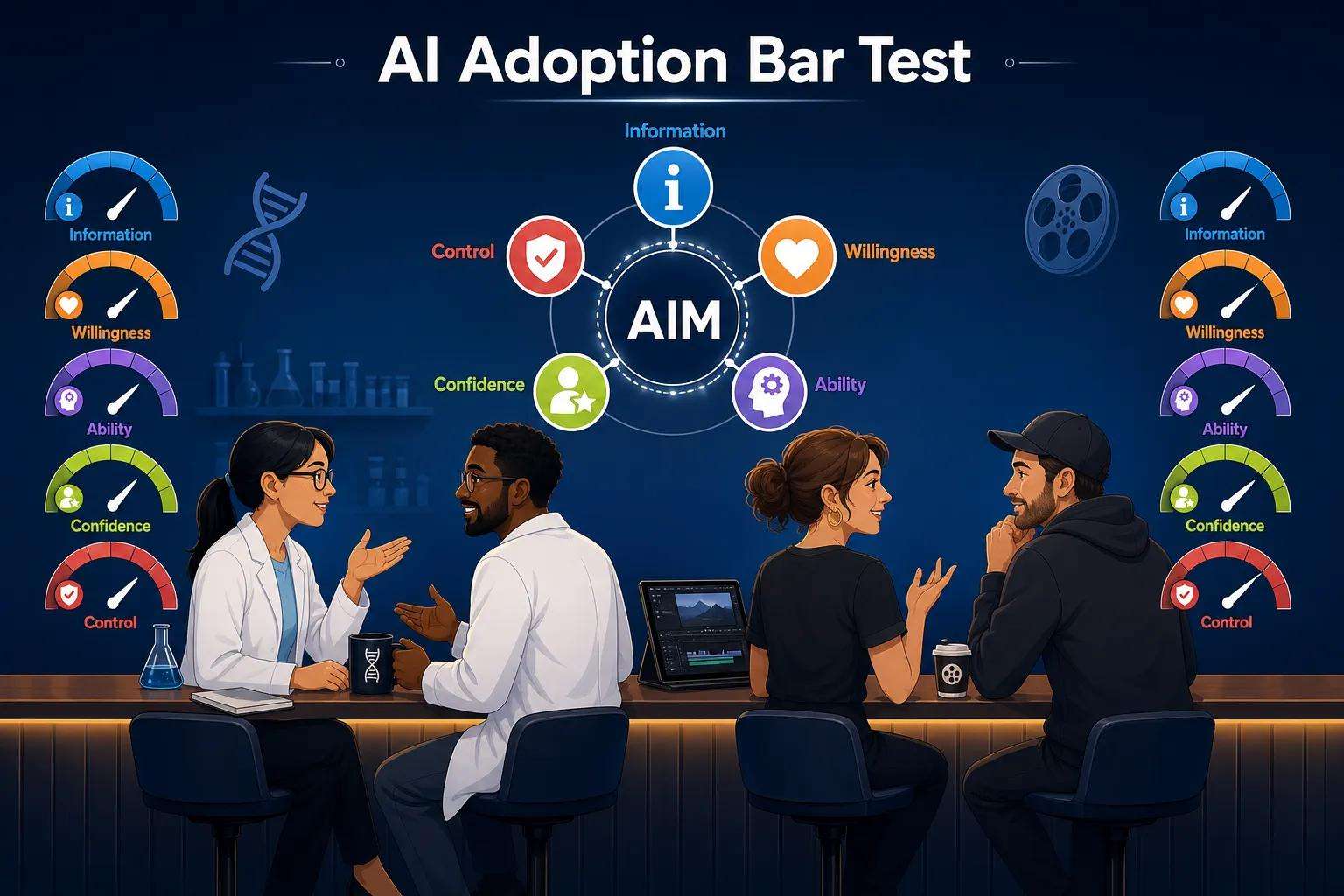
Your change management methodology should be flexible and scalable so that you can apply it no matter what type of reporting relationships you are dealing with.  This "scalability" is a critical feature of the Accelerating Implementation Methodology (AIM) and is especially important when you are dealing with the complexity of enterprise wide change.

Find out more about what it takes to implement enterprise wide change in our upcoming webinar.  Register now.

Enterprise-wide Change: Are You Installing or Implementing?


What's the end-goal for your enterprise-wide change?

That may seem like an obvious question, but it's really not!  

In our thirty-plus years of change management consulting we've observed a common pattern of "premature project completion"  across all types of organizational changes, including enterprise-wide change. 

Why do we say it is pre-mature, when you can confidently observe these things happening...

  • the technology works 
  • the process is introduced
  • the organization has been re-structured (again) and people are in "new boxes" on the chart
  • the Lean/Six Sigma team is hard at work identifying root causes for problems and best solutions, with expressed support from executives
  • the shared services model is in place
  • the quality processes/customer centric strategies/safety procedures are launched via an extensive road show

But what has really changed?  Possibly nothing!

The change has occurred at the veneer of the organization, but there has been no sustained behavior change-- or what we call adoption.  

Remember the principle from the Accelerating Implementation Methodology (AIM)-- no behavior change---- no implementation!

In other words, you get to launch or go live, but you haven't fully implemented true enterprise-wide change.  

When we first introduced this concept to our change management consulting clients, the reaction was pretty universal.  Most readily saw that there was a clear "installation mentality" in the organization.  Frankly, this hasn't changed much.

And the reason is fairly simple--there continue to be powerful reasons for sustaining an installation mentality:

1.  Scarce resources that drive the project team to be re-assigned to other projects prematurely.  This is further complicated by the common tendency to commit what we call "fuzzy resources" to projects; that is, change agents that are assigned to spend just a small percentage of their time to multiple projects

2.  Budgets that are developed based only on getting to the launch date for the enterprise-wide changes-- not on continuing on to ensure there is value realization/Return on Investment.  This is particularly ironic because the data strongly and repeatedly tells us that the greatest risks of failed or stalled implementation are cultural and organizational elements (the human elements) that are not addressed with the same rigor as the technical and business objectives.  But organizations that are data-based in other areas of the business still choose to over-look or minimize these risks!

3.  Ease in quantifying installation, meaning that we can much more easily monitor and measure the key drivers of "installation"-- on time, on budget delivery.  These are criticallyinstallation vs. implementation mini guide important measures, but insufficient if the end-goal is value realization

4.  Performance measures that reinforce and reward both leaders and project teams for installation, not implementation.  As organizations, we are seduced by the amount of installation activity going on "out there" rather than doing the hard work of changing behavior of sponsors.  

The installation mentality is a cultural pattern, and leaders repeat the behaviors driving the installation culture because they are reinforced for it.  "Every where you see a pattern, there either is or was a reward for it," says Don Harrison, the developer of AIM.

The reason that we tell our change management consulting clients that success is measured by achievement of all five success metrics (on time, on budget, all business, technical and human objectives met) is that all five are required to get to full implementation and value realization!

If you are embarking on complex, enterprise-wide change, are you installing or implementing?
 

Revelations from Our Change Management Consulting


One of the advantages of our change management consulting work is that we have a birds'-eye view into what is going on across global enterprises in terms of change management practices. 

Here are some of our observations:

1.  Every organization thinks it is "unique" yet there are a significant number of commonalities.

One of the insights we have gotten from our change management consulting is that there are likely more commonalities than differences when it comes to implementation challenges.  Many of these similarities are outlined below, and they are seen no matter whether the organization has 5,000 or 50,000 employees.

2.  Far and away, active, sustained sponsorship is the most significant barrier to change.

While many enterprise-wide changes are led by sponsors who are championing the change in words, these same individuals often fail to provide the requisite reinforcements for their own direct reports.   The leaders who are one or two levels down are assumed to be committed to the change, yet they may have their own personal agendas that are far greater motivators. 

We know from our over 25 years of change management consulting that the primary accelerator for implementing strategic initiatives at speed is the cascase of commitment by sponsors, level-by-level--- sponsors that are demonstrating commitment by what they express (say), model (do), and reinforce (provide positive and negative consequences to their own direct reports.) 

These high-level sponsors are inadvertently creating "black holes" that change agents are confronted with and often can't overcome-- resulting in many changes that stall out.

3.  Lack of prioritization of the change agenda is barrier to change.

Organizations are spinning with activity, but the portfolio of change is not being effectively managed.  In our change management consulting work, we see great opportunities for improvement in "portfolio management."  This enables increased awareness of inter-dependencies, better sequencing, more effective use of resources, and improved governance.

4.  Many large-scale, complex enterprise-wide changes are not sufficiently well-defined up-front. 

Because there is so much going on in organizations, the pressure to move quickly is driving metrics for enterprise-wide changeproject teams to begin without a sound change definition.  While budget and timelines, and technical objectives are generally clear, there is not the same clarity on the business and human objectives for the change.  Organizations are doing a much better job at developing sound project charters, but still lack definition of the "behaviors we seek to see" in the future state.  

As we say, you can't measure success on the back-end if the metrics aren't clearly established up-front.

5.  "Installation" focus is wide-spread.

Given the pressures to do so much, the definition of success becomes activity-based (get the change launched) rather than results-based (get sustained adoption of the change and true benefit realization.)  It's tempting to be seduced by measures of activity instead of focusing on the harder work of implementation.  However, once we introduce the concept of "installation vs. implementation" in our change management consulting, leaders do begin to see that there is a difference in these end-goals.

6. There are lots of resources being thrown at enterprise-wide changes (think shared services) without an enterprise-wide change management methodology or change approach.

While there is logic to using one change management methodology when implementing across the enterprise, many enterprise-wide changes are being attempted within existing vertical power structures.  So there is an immediate discrepancy between attempting to implement transformational change in the "same old ways" and expecting radically different results. 

The simple mantra to "be the change" remains highly relevant.  There is much to be gained by uniting the organizational silos with one approach and implementing in a manner that is consistent with the future state.

What are your observations on change management practices?

successgrader-cta


Budgeting for Implementation of Enterprise-Wide Change


The budgeting season is upon us, and your organization may be planning resource requirements for transformational, enterprise-wide changes like shared services, acquisitions, one company, or customer-centric strategies.

It's a time when the vision of the organization is translated into operational plans and programs.  As top leadership considers how best to gain competitive advantage, streamline costs, build shareholder value, and win the hearts and minds of customers, new strategies are defined.  There’s no doubt that strategy development is critical, but what is strategy really except a series of programs and projects that must be implemented?

Implementation success for enterprise-wide change requires a predictable set of activities that must be accounted for from a budgeting perspective.  Organizations can either budget sufficiently for these activities now, or pay the price later in stalled or failed implementations.

Investing in the Human Aspects of Enterprise-Wide Change

It’s common for organizations to focus on the budgets for the technology and business aspects of strategic implementation.  Often, less emphasis is put on the resourceenterprise-wide change target is sustained adoption requirements and deliverables for the fully array of human elements of the implementation.  This includes activities that are either overlooked or under-resourced, including building change agent capacity, building readiness for the change, securing full sponsorship, developing a reinforcement strategy, and building a communication plan.

Unfortunately, this can leave a project team woefully short of the budget needed in terms of the size of the project team, the number of change agents across the affected areas, and the time allocated to complete the project through to sustained adoption.

Instead, the budget is developed based on the premise that the project will be complete at the point of “go live”, rather than at the point that benefit realization is achieved.  This creates a major barrier to success right from the start, because the budgeted goal is "installation" when the true end-goal should be "implementation."

Three Ways to Improve the Odds for Implementation Success

As strategy development becomes translated into operational budgets and plans, here are three actions that you can take to improve the odds for implementation success:

1. Budget for Implementation Capability Development

If the organization is investing in a new strategy, it’s common sense to make certain that the players have the knowledge and skills needed to implement the strategy. 

For example, this means ensuring that sponsors are aware of how their own behavior will control the pace of the implementation.  It means that change agents will need to have an understanding of the principles and tactics for building commitment (or compliance) to the change implementation.  It means the change agents must have the skills and knowledge to effectively contract with sponsors.  

Investing in implementation capability has short-term immediate value, and long-term benefit. The organization with implementation capabilty has an enormous competitive advantage.

2.  Budget for Sufficient Resources for the Project Team and Change Agents

If the organization is investing in large-scale, complex transformational change, make certain that there are sufficient resources committed. Sponsors typically under-estimate what it takes to actually implement enterprise-wide change.

Implementation is a ferocious, resource-consuming activity.  Teams consisting of large numbers of “partial resources” can be inefficient.  

One way that authorizing sponsors visibly demonstrate their commitment to enterprise-wide change is how they allocate resources.  If sufficient budgets haven't typically been allocated, this is an immediate and visible opportunity to demonstrate that this enterprise-wide change is different.

  1. Build a Timeline that Reflects the Implementation Activities and Deliverables Required for True Implementation Success

As the budget is built, consider that the project team infrastructure will need to remain in place until the goal of full implementation is achieved.  By our definition, implementation is only deemed successful when it is on time, and on budget, with all business, technical and human objectives met.  If you stop short and disband the project infrastructure at the point of “Go Live”, you are risking achieving benefit realization for your change.

By budgeting with the goal of Return on Investment in mind, your organization is far more likely to achieve the desired results for enterprise-wide change.

  enterprise-wide-change-cta


The Business Case for a Change Management Methodology


Imagine you are a business leader weighing strategic options.  You evaluate the costs versus benefits of implementing a new enterprise-wide strategy that will build efficiencies, address global competition, improve the customer experience, re-structure operations, or reduce costs.  Whichever option or combination of options prospectively appear to drive the greatest financial return, you can protect that investment and significantly increase the likelihood you will be able to implement on time, on budget, and achieve all your objectives—all at a relatively small cost.  From a bottom line perspective, isn’t organization change management a “no-brainer?”

 Why Do Data-Based Leaders Ignore the Data?

There is a strong business case to be made for applying organization change management with articles about the financial benefits in business publications like McKinsey’s Quarterly.  There’s also plenty of dismal financial data about the success rate of implementations that would theoretically lead any rational leader to the same conclusion:

Organization change management is an essential component of any planned implementation.

Yet why is the data ignored so often by leaders who are data-driven in every other area of the business? 

We can only speculate that part of the reason is that many change management methodology approaches are just not “business-driven” and therefore, leaders don’t see the solutions as a relevant protocol in the same way that they view Lean/Six Sigma or even investing in organization change managementproject management.  

The inherent skepticism is reinforced by internal change agents who fail to focus their discussions with leaders on the three things that every leader or sponsor really is interested in:

  • Can I get this done faster?
  • Can I get it done better?
  • Can I get it done cheaper?

As change practitioners, we must be mindful of the Frame of Reference of leaders, and stop approaching them from our own perspective and speak in theirs.

How to Change the Mind-Set of Leaders

Given this reality, what can internal change agents do to shift the mindset of leaders?

1.  Implement a business-driven change management methodology (like AIM) that‘s practical and aligns with the language and objectives of leaders.  While this may sound self-serving, it’s a fact that leaders will respond more positively to a systematic, business-driven change approach with clear success metrics.

2.  Focus discussions on the need to build internal capability to implement, and offer a systematic plan for getting to that end-goal.  This makes up-skilling your change management capability an investment, rather than a cost.

3.  Use data as the foundation of your discussions with leaders whenever possible.  Data is the language of business!

4.  Apply a systematic “sponsor-contracting” process as the framework for your discussions, keeping in mind that “better, faster, cheaper” is the Frame of Reference of your leaders. Take out “soft” language like “I need your support” from your requests.

5.  Focus on the rationale of one change management methodology as a model for the desired end-state of the initiatives (i.e., if you are seeking to operate as “one company” based on best practices it just makes sense that applying one framework to get there will build efficiencies and speed.)

6.  Track the success rate of changes against the key metrics of on-time, on budget, all business, technical, and human objectives met.  Educate your leaders that the end-goal of strategic changes is “implementation,” not “installation.”

ivi


Using Change Management on Your Change Management Methodology


One of the ironies of implementing a change management methodology across the enterprise is--it requires change management!   Even if you see the obvious benefits of applying structure on the people-side of projects, the fact is that you are introducing a new way of operating, and it brings with it all the challenges of implementing any other kind of enterprise-wide change: the need for Sponsorship, reinforcement, readiness, and a sound communication plan.  It’s why we say you actually need to use “AIM on AIM.”

So taking a structured approach makes sense, but how do you begin? 

Without applying the AIM principles, you can anticipate a high-degree of resistance and the very real risk that the organization will simply revert back to project management as usual, letting go of the opportunity to make significant strides in speed and implementation success.

Begin at the Beginning with a Compelling Change Definition

Organizations are complex.  Adding an enterprise-wide change like a new methodology just adds more complexity.  To navigate that complexity requires planning, and at a minimum that planning should include project management activities and tasks, timing and responsibilities for:

  • Defining the Change
  • Generating Sponsorship
  • Developing Target Readiness
  • Building Communications
  • Developing Reinforcement

As with any change, the place to start is to articulate the change in way that clearly describes how the future state will differ from the present state.  A compelling change definition for AIM, might look like this:


WHAT

Blending the human and the technical sides of implementation.”

  • Increase employee acceptance for change
  • Align organizational behavior with new processes, practices, & expectations
  • Assure tight “fit” between the change and the culture
  • Application of practical, common sense implementation tactics, in a situational and systemic organizational context

WHY

“It’s a game of implementation.  Only 15% of the job is figuring out what to do.  Making it happen is where the action is.”

  • Increase probability of realizing the  expected ROI on implementation efforts
  • Avoid the typical “70%” implementation failure rate
  • Preserve strategic imperatives & finite resources
  • Bottom-line -- market competition is fundamentally about the speed of change

CONSEQUENCES OF Ø CHANGING

“Low yield execution -- you don’t get the change you expect”.

  • Project R.O.I not captured
  • Leadership credibility erodes
  • Waste resources - time, effort, $
  • Future implementation efforts are less likely to succeed
  • “Install” instead of implement

IMPACT ON LEADERS

“Must be the change you are trying to create.”

  • Must express, model, and reinforce “it” (i.e., structured approach to implementation)
  • Willingly connect your name to it
  • Cascade commitment
  • Support it publicly and privately
  • Make personal changes first

Moving to the Real World

Moving from learning the language and principles of AIM to the realities of implementing the methodology from a practical project application perspective takes commitment, thorough planning, and involvement from key organizational people.  Organizations must:

  1. Select the right individuals and build a skilled team of Change Agents
  2. Plan a comprehensive approach for using AIM
  3. Rigorously follow the AIM principles, scaled to the implementation

Selecting the proper group of Change Agents is critical. Individual Change Agents are responsible for helping leaders define the change, creating a network of Sponsorship, contracting with and coaching Sponsors, managing Target resistance, and building Target reinforcement. 

It’s far better to introduce the methodology on a project by project basis, rather than by attempting to implement it generically as a new “cultural ethos.”  As you inculcate the methodology, one project at a time, you demonstrate value, and lower resistance. 

Rigorously Apply AIM

But unfortunately, planning alone offers no guarantee of success.

Quite often, in the process of applying AIM, a good deal of re-direction is needed: continually re-evaluating Sponsorship and re-contracting; reading resistance and altering tactics; getting feedback from Targets on reinforcement and communications; evaluating Change Agents’ capabilities and making hard choices. 

Getting an organization past the barrier of installation and to full implementation takes dedicated resources, a planned approach and a rigorous method.

schedule-a-demo-cta

A Change Management Methodology for Big, Hard Changes


Are all change management methodologies created equally?  That was one of the most common questions at the recent Association for Change Management Professionals AIM Roadmap for ChangeConference in Las Vegas.

After listening to many conference speakers shared their own "home-grown" change management methodology and discussing various other well-known approaches with conference participants, here is a summary of the discussion and observations:

1.  Many of the so-called change management methodologies are not tactical at all.  There may be some associated tools and templates, but they do not offer both tactical and strategic guidance to users.

2.  AIM (Accelerating Implementation Methodology) really stands apart in its business focus.  Other frameworks lack the the focus on the bottom line and business results and are much more about getting people on board with the change.

3.  No other change management methodology is designed to be systemic.  There are good tools and templates available in the other approaches, but they are not designed to be applied as a whole system that inherently changes the way the organization gets work accomplished.

4.  If you have big and hard changes (like enterprise-wide change) in a complex organization, you need a change management methodology that is equipped to handle change at the programmatic and the project levels.  Again, AIM stands apart.

5. No other change management methodology is designed to integrate with project management protocols and other process improvement protocols like Lean/Six Sigma.

5.  Many of the home-grown approaches put very little emphasis on altering reinforcements, yet we know that unless you change the reinforcements, there is no behavior change!

AIM may not be as universally well-known as some of the other change management methodologies, but it addresses the requirements for big and hard changes better than any other. 

enterprise-wide-change-cta

All Posts