describe the image

Subscribe by Email

Your email:

Browse by Tag

Follow Me

IMA's Implementing Organizational Changes at Speed Blog

Current Articles | RSS Feed RSS Feed

Is Better, Faster, Cheaper Enough for Transformational Change?


Are your leaders confused about transformational change?  Do they talk about transforming the organization, when what they really mean is cost-cutting?

Remember that if you talk "transformation," you can't just deliver better, faster, and cheaper or you will teach the organization the existing Frame of Reference (FOR) is okay and all you need to do is make minor modifications.

Real transformation is defined as "frame-breaking," meaning that the old Frame of Reference is no longer adequate.  A new Frame of Reference must be created, and it is by definition radical.  It results in maximum disruption and, therefore, resistance (resistance is a function of the amount of disruption.)  The organization must "forget about what we are doing now" and re-build processes from the ground-up.

For manContinuous Improvement or Transformation?y organizations, they talk "transformation" but what they are really after is better, faster, cheaper, or more often.... making multiple improvements around something that already exists.  This is continuous improvement, but it is not transformational change!

Transformational change is inherently also culture change.  And culture change is transformational change.  This requires a tenacity of purpose from sponsors for a minimum of 2-3 years.  If the transformation is not one of your top 3 strategic priorities over this period of time, the transformation is dead in the water.  And if it's divorced from your other business objectives, it's dead, too. 

download-the-ebook

Sponsors Must Pay a Personal Cost for Transformational Change


One of the primary reasons why transformational change efforts fail is because sponsors don't model that "this time is different."  The modeling that must occur on the part of sponsors must appear to be personally painful. 

There must be some overt and demonstrable change in sponsor behavior that signals a sacrifice on the part of that sponsor.  Otherwise, it appears that the transformational change is for everyone out there, and not for the people who live in mahogany row!

If sponsorship is the single most important factor in accelerating transformational change, then it can't possibly follow that you can create that type of radical change with minor-- or even no changes in sponsor behavior. 

Sponsor for Transformational Change

Therefore, the most successful transformational changes occur when:

  1. Incumbent sponsors live their own transformational journey in plain view of the organization
  2. The ways in which sponsors model the journey are inherently transparent
  3. Sponsors demonstrate their willingness to sacrifice on a personal level
  4. The required substantive changes are made at an individual level, and then these sponsors lead the organization and drive the transformation

One of the best examples we've seen is a CEO who took no salary for a year to demonstrate his personal sacrifice.

When sponsors visibly model their personal commitment to the transformational change, it can make an enormous difference. As Gandhi put it so simply and eloquently, "Be the change you are trying to create."

download-the-ebook

The Conundrum of Sponsorship for Transformational Change


Many times, the people you actually are seeking to sponsor the transformation, and who have the most impact on driving the transformation, also have the most resistance to the change!

This is the paradox of transformational change.  You may be looking for resistance to the transformation deep down in the organization when, in fact, the most resistance will come from mid-managers through executive ranks.  transformational change is radical and complex

Remember that your culture is self-replicating; the culture selects who will be successful based on who best fits with your current behaviors and values.  But now you are looking to radically alter that Frame of Reference. 

The highest level of resistance to the transformation will come from the individuals with the highest vested interest in things remaining the same.  And which individuals have the most to lose?  It's the higher-level managers and sponsors who have "paid their dues" and have been successful in the current culture.

This is the conundrum of sponsorship for transformational change:  sponsors are the key drivers of transformational change.  What they say, what they do, and what they reinforce on a daily basis determines 50-70% of the likelihood of achieving value realization for the transformation.

Yet these sponsors are reluctant! When you ask why they aren't giving you what you need, realize they are doing what has made them successful in the past.  They are just replicating past patterns of behavior, but now you need them to do something very different. 

Are your sponsors willing to radically alter their own behavior-- at all levels of the organization, and in all the areas of the business that are impacted by the transformation?

Download the eBook on Meeting the Challenge of Transformational Change to see if your transfomation is on the right path.

download-the-ebook-click-here

What to Look for in a Change Management Methodology


What's a change management methodology, and why is it useful?  A methodology is a process or framework that ideally is repeatable across the organization.

Just like Lean/Six Sigma is a problem-solving, process improvement methodology, a change management methodology is a process that is applied to business changes to manage the human elements of a change.

change management methodology builds competitive advantageA  change management methodology is useful is because its application ensures that you are not taking a "hit or miss" approach where one project team does all the right things (and gets adoption and value realization) and another team misses key elements or steps.  This is a way to reduce risk of failure or sub-optimization!

In addition, many change management methodologies include tools and templates that project teams can use. 

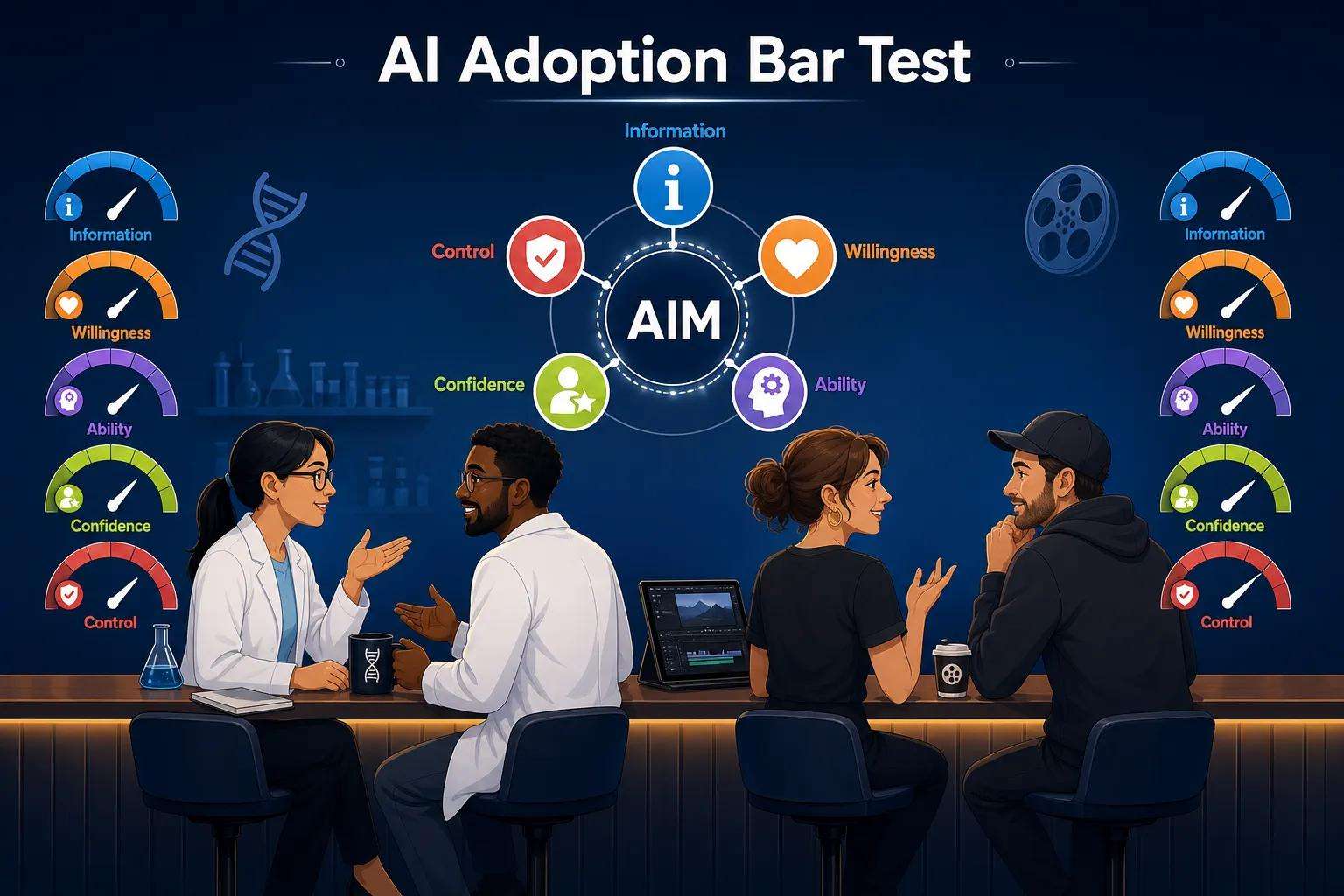
People often ask us, "How does AIM (Accelerating Implementation Methodology) compare to other change management methodologies? 

Simply put, AIM is more business-disciplined and business-focused than other methodologies.  Because it is a systematic and systemic change management methodology driven by data, it appeals to business people, scientific professionals, IT professionals, and the HR/OD professionals who are typically assigned to managing the human side.  It is very practical and its intent is to get changes of all levels of complexity implemented at speed-- and speed is a competitive advantage!

What about a "home-grown" change management methodology?  Most are a hodge-podge of concepts that lack the cohesiveness of a best practice approach.  They aren't focused on supporting the way the business actually operates and implements.  And they are not generally data-driven.

Organizations have seen the value of standardization and consistency in the business to reduce costs and increase efficiencies; that's exactly what a best practice change management methodology like AIM delivers.

download-our-whitepaper-click-h

All Change Agents are Not Created Equally


One of the key principles of organizational change management is that implementation takes place at the local level.  This means that no matter how good your project team is, you still have to rely on a skilled cadre of change agents to actually implement your technology, process, restructuring--whatever your change is.

These change agents are often mistakenly selected based on availability.  "Who has the time to take this on?" is the wrong question.  The right question is, "Who has the skills, knowledge, credibility, and trust" to be a successful change agent for us?  You can pretty much be sure that individuals who meet these requirements are very busy people and are highly sought after.  People who have a lot of time on their hands are available for a good reason!

Making certain you have the right number of change agents, with the right skills, in the right places is a critical component of organizational change management and it is called out as a step of the Accelerating Implementation Methodology (AIM).  There is a Change Agent Assessment tool available to help you evaluate potential change agents so you can be sure you have the right people in this critical role.

AIM Roadmap

Even when you find people with the right raw material to be an effective change agent, it is extremely helpful to equip these people with the resources they need to be successful.  For example, a good change agent must be able to contract with sponsors for what they need at any given point in time.  This doesn't come naturally to everyone, but you can train people to contract (IMA does that in our AIM Accreditation program) and you can provide them with a contracting template to follow. 

Here are some questions to consider when you select your change agents:

1. Do we have a clear and precise description of the role and responsibility for our change agents? 

2. Have we communicated these expectations, and will our change agents be evaluated on their ability to implement successfully?

3. Do we know how many change agents we need based on where we need to develop sponsorship and where we anticipate the greatest disruption?

4. Have we selected individuals based on their skill/ability/credibility?

5. Have we trained these change agents and provided them with the resources they need (tactics, strategies, templates, and tools)?

Organizations which select change agents based on who is available or expendable may be making a lethal error.  Successful implementation requires change agents who have a formidable range of skills and motivation.

download-sponsor-cont


All Posts