Over more than two decades of change management consulting, we have had the opportunity to observe what works well in implementation—and where the traps are that get in the way of project success. It’s a long-term field-research opportunity, and includes data from leading global organizations. Here’s what the research from our change management consulting tells us are 7 of the most common “bumps in the road” that cause projects to de-rail.
1. The organization lacks a rigorous project management system and discipline. We have talked about the importance of governance, a key element of project management. If the organization is investing in enterprise-wide change, or any type of complex change, it goes without saying that professional project management is essential.

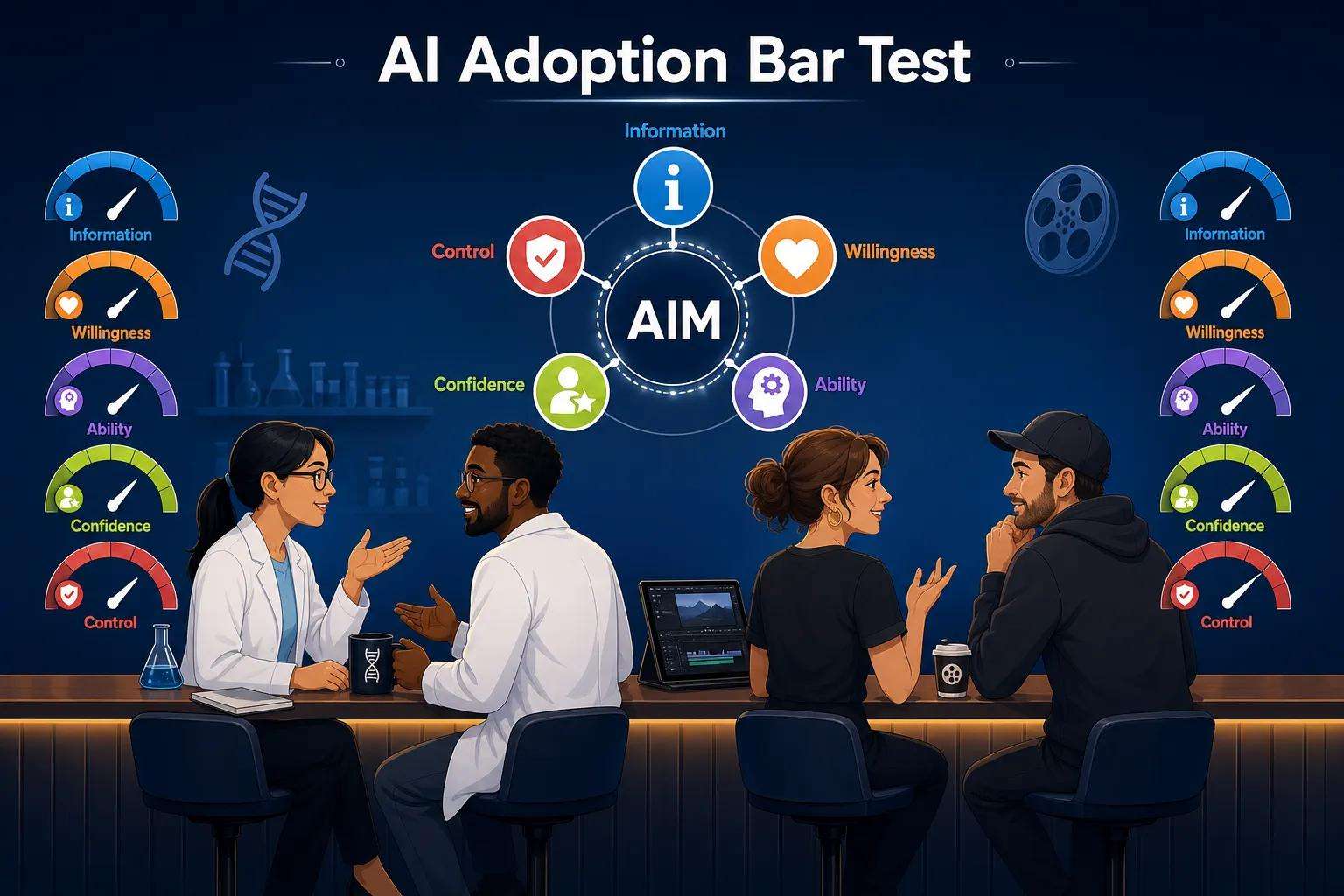
2. There is no status-reporting mechanism. One of the major benefits of the Accelerating Implementation Methodology (AIM) is that it serves as a risk-dashboard for your change. By employing the measurement diagnostics such as the Risk Forecast at milestones throughout the project, you can identify where risks are emerging that need to be addressed. Again, it’s important that status-reporting include progress and risks across all 5 measurement dimensions: time, budget, business objectives, technical objectives, and human objectives.
3. Low accountability or risk-averse culture or implementation history exists. Who exactly is accountable for the success of your project? Is it just the project team? What about your reinforcing sponsors—do they have any accountability? (We know that you can expect the most resistance from mid- to upper-level managers.) And if you have identified that your organization has a risk-averse culture, how are you changing the reinforcements so that it becomes politically safe to drive innovation?
4. Agents and sponsors are seduced by activity or the “plan.” Simply put, your project team can be very busy, but are you busy doing the right things? Change is dynamic, and you must constantly have your fingers on the pulse of where resistance is emerging and whether you are getting what you need from sponsors. You can’t be so locked into the plan that you are not adapting to current developments.
5. Fire-fighting “arsonists” are rewarded. One of the common problems we see in our change management consulting is that by rewarding the individuals who fix the crises, the organization is actually encouraging the crises themselves. It becomes a self-replicating behavior. This is why creating a “burning platform” for change doesn’t work! You encourage the fires!
6. Agents are seduced by actions that are “safe” but have low impact. The pace of your project is based on sponsor drive, not on the level of project activity from the project team. So it stands to reason that if your team isn’t focused on securing active sponsorship, creating reinforcement, and you are avoiding dealing with resistance you may not be focused on the “right stuff.”
7. Scarce resources aren’t targeted by measurement for maximum impact. Since you will never have all the resources you need for implementation, the key is to target those resources in the places where you will get the greatest impact. You can’t do that without measurement—that’s why the AIM measurement diagnostic tools are so useful. Remember, the more often you measure, followed by positive and negative reinforcements, the faster you can go.
Do you see these barriers in your organization? What are you doing about it?
One of the reasons why transformational change is so difficult is that you have to cross organizational boundaries and align multiple sponsors. It's not easy!
Remember that reinforcement is the power lever for driving transformational change. If you are working within a single organizational silo, you can build a cascade of sponsors from top to bottom that reinforce the new behaviors-- the behaviors you seek to see. That is challenging enough.
But most transformational change requires crossing the power structures. You most likely have multiple sponsors, often within a matrix structure-- so building a reinforcement strategy is much more complex. If you are working as a change agent, you need to make certain that your authorizing sponsors are aligned in two ways:
- They share common goals
- There is strategic inter-dependence

Without these two factors being present, you can end up spending your life going from office to office in mahogany row!
Practically speaking, this means that your sponsors will need to co-own the initiative, and they must be jointly reinforced for the success of the transformational change. In other words, Sponsor A is only deemed to be successful if Sponsor B is successful.
Going vertically is much simpler than going horizontally-- what is termed "lateral process integration." It's one of the many challenges you face in implementing transformational change-- and another reason why a structured framework for implementation (like AIM) is so useful. You are using one language, one process for the implementation so that you model the desired state in the way that you implement.
One of the critical elements of a sound change management methodology is ensuring that you are working from a current "snapshot" of organizational climate. We believe there are two critical elements to consider:
1. What is the current level of change activity in the organization? How many "priorities" are competing for mindshare and resources? 
2. What are the past patterns of implementation? Are there failed implementations that still live on and are, in fact, sources of resistance for the current change?
The AIM change management methodology assesses both of these so that strategies and tactics can be put into place to mitigate risks.
In terms of the need for prioritization, one of the most difficult messages for leaders to accept is that when there is too much change activity going on, there is a much higher risk for failed or sub-optimized programs and projects. As part of our change management consulting, we tell leaders that they need to "focus down to speed up." Even if you can't eliminate some of the projects, it is often possible to sequence the activities so that you are better positioned for success.
There is also great value in looking at past history as part of your change management methodology. Remember that no change occurs in isolation; it occurs in the context of all the past implementations and all the other things going on in your organization right now. Leaders will replicate current patterns of sponsorship-- and if your past implementations are spotty, what makes you think that this time will be different?
Do you know your climate for change? If you don't, you should!
One of the issues we are frequently confronted with is how much a client should invest in change management consulting, especially as it relates to transformational change. In most cases, quite frankly, the investment in change management consulting is basically a "rounding error" in terms of the overall investment for the transformation.
That said, we strongly believe that the investment should only be made if there is an underlying assumption that we are building the client's capability to implement better for both short and long-term-- that we are "teaching the client to fish" rather than fishing for them.
In other words, we are ensuring value realization for the transformation at the same time that we build long-term, sustainable capability. That's why
the change management consulting must also include education for sponsors and change agents. At the end of the day, we can't implement transformational change for a client-- and any consultant that makes that promise needs to Get Real. Remember that no change management consultant has the ability to reinforce behavioral change (that's between managers and their direct reports!)
But here's what change management consultants CAN do:
- work with sponsors to increase their ability to express, model, and reinforce the change
- bring difficult messages to sponsors that they need to hear, and that might be political suicide for internal agents (or ignored since you can't be a prophet in your own land)
- help position the transformational change for success through best practice governance
- teach change agents how to contract with sponsors, and provide modeling and feedback on the process
- identify the right communication vehicles and how to tailor messages for the varying frames of reference
- and perhaps most importantly, identify risks and provide practical advice on how to mitigate those risks
Change management consulting is no panacea for transformational change-- but it can be a major contributor to positioning the change for success. Is that worth the cost, when 70% or more fail to fully deliver value realization?
The second critical element of a
best practice change management methodology is to build the capacity of your agents of change.
While this may sound obvious, and simple, the fact is that many organizations don't take a systematic approach to building capacity. This is largely because there isn't a system-wide view of where the change agents are needed!
A change management methodology isn't effective if it is just focused on theoretical concepts. The hard work of implementation requires a practical approach to implementation. It's all about execution.
Remember, too, that implementation takes place at the local level. So if your change management methodology doesn't provide tools for identifying the right people for the role of change agents, and you don't have a systematic way to ensure you have the right numbers of change agents, in the right places, you are going to miss a critical element of successful change.
One of the reasons why people appreciate the practicality of the Accelerating Implementation Methodology (AIM) is the key role mapping done for every change. This is a visual depiction of the organization where we plot where sponsors and change agents are needed.
A common mistake is that change agents are selected based on who is available or who is the most technically knowledgeable rather than on who has the right skills. The best people are usually snapped up in a nano-second and so overloaded because everyone knows that they deliver!
Here are some things to look for in identifying your change agents:
1. Do they have trust and credibility with sponsors and targets?
2. Do they know how to use power and influence?
3. Are they able to set goals and achieve them in a very unstructured situation?
Right numbers, Right skills, Right places-- how does your change management methdology measure up when it comes to building agent capacity?