"How do we get the Sponsorship we need over the entire life of our transformational change?"'
If you have that same question, you are not alone! In fact, it's the most common question clients ask about transformational change. Do these sound familiar?
- Sponsors say they support the transformation, but never have the time to participate in critical meetings or fulfill important commitments
- You can't get on your Sponsor's calendar for weeks
- You're plagued by infighting and politics between Sponsors
- Sponsors are inconsistent in what they say and do regarding the
transformational change
- Decision-making is painfully slow
While you might take some small comfort in knowing others are experiencing some of the same challenges you face that doesn't get the problem fixed! Good Sponsorship is the result of a combination of factors:
- Sponsorship is in place at all levels required for project success
- The change team has clearly identified what it needs from Sponsors
- There is clear communication from the team to Sponsors on what is required
- There are firm, specific commitments from Sponsors
- There is ongoing dialogue between Agents and Sponsors on fulfillment of commitments
- There are consequences when Sponsors do not meet commitments
The best way to do that is by amping up your Sponsor contracting skills. These skills are probably the most important skills in any Change Agent's toolkit.
If you aren't familiar with Sponsor contracting, we are talking about the dialogue that takes place between the Change Agent and the Sponsor in which the Change Agent secures the actions he or she needs from that Sponsor. Contracting translates Change Agents’ needs into a clear, specific agreement which can be acted upon and measured against.
Negotiating Sponsor Contracts
The strength of the Sponsor contracting process is that it enables Sponsors and Agents to engage in a candid dialogue about what Sponsors need to express, model, and reinforce to ensure successful implementation of transformational change, and therefore the change becomes a part of the way you do business. The following consequences may arise when Sponsor contracting is not used:
- Sponsors are not clear on what is expected of them during the change
- Sponsors are unable or unwilling to fulfill their commitments
- Sponsorship gaps or ‘black holes’ will surface
- No upward feedback mechanism will exist to enable Sponsorship improvement
- Sponsors will be inconsistent in what they say and do regarding the change
- Targets will not be motivated or receive consistent reinforcement on what is expected of them
So use these strategies to develop a contracting process that will minimize these consequences.
Before Beginning the Contracting Process:
-
Assess the culture and unwritten rules to determine whether to use an informal or formal contracting process
-
Identify individual Sponsor needs to identify what they will need to successfully act on and what will be expected of them during the change (i.e. education, coaching, etc.)
During the Development of the Sponsor Contract:
Create a dialogue that establishes mutual expectations about the content of the contract between the Sponsor and agent during the negotiation process. This dialogue and the resulting conversations are more critical than the actual contract because the contract serves as a tool to use during these conversations, to monitor expectations, and to provide feedback between the Sponsor and the direct report.
Formal/informal Contracts and Culture
Each organization you work with will have different levels of formality/informality. Your contract design must ‘fit’ the culture. In a formal culture where the only commitments which are adhered to are the visible, formal ones....a written, signed contract which is held by the Authorizing Sponsor may be appropriate.
In another culture, discussions and verbal agreements may be the norms of the group. In deciding whether a formal or an informal contract is needed, include the following variables in your assessment:
- The Sponsor’s history of strong Sponsorship
- The Sponsor’s level of commitment to the project’s success
- The risk of this Sponsor not following through
- The ease/lack of ease in providing feedback to this individual
One word of warning: don't be swayed to set contracts aside by the newness of contracts to the culture. Sponsor contracts are a new tool to most parts of the organization and there is likely to be resistance to using them.
How to Ensure Candor
Strategies to promote candor during the Sponsor contracting negotiation process include:
- Create a safe environment to have a dialogue by finding a place and time free of interruption
- Be authentic by stating what you need and why
- Listen and watch for both verbal and non-verbal information
- Provide an opportunity for both parties to identify what they need from the other person and what they can offer to meet the other person’s needs
- Be open to receiving feedback
- Give constructive feedback by focusing on what is working well and what is still needed
Sponsor contracting is arguably the most effective way to fix one of the most common issues in transformational change implementation.
The terms "transformational change" and "transformation" may be two of the most over-used words in business today. In our change management consulting work, we identify three different types of strategic change:
- Minor change creates minimal disruption (and therefore minimal resistance to change.) Examples are routine changes to policies and procedures.
- First order change creates significant disruption so there is consequently also major resistance to change. An example is a new ERP system or the introduction of a portfolio management tool.
- Second order change is "transformational change" and is a complete
alteration of the current operating structure, with massive change to
processes, people, and typically, technology. Since resistance is a function of the level of disruption the change creates, transformational change also brings with it significant resistance. Examples are shared services solutions that break down organizational silos and drastically alter how the company operates.
Based on our change management consulting work, we can predict 10 common barriers to transformational change:
1. Lack of clear scope/definition: An amazing number of organizations embark on the transformational change journey with no clear, consistent definition of where they are going. Leaders have multiple, often conflicting agendas.
2. Too many other changes competing for resources: Senior executives routinely underestimate the level of resources needed for transformational change. "Implementation" is a ferocious, resource-consuming activity. Once the strategy is designed you are only 15% of the way to transformation! You still have 85% of the journey ahead. The best advice: focus down to speed up.
3. Poor implementation history: If your organization has a cemetery full of "dead and buried" projects you can expect that the memories of these linger on. You will likely face to resistance to your current transformational change based on the experience of what went wrong in the past.
4. No sustained leadership support: Sponsorship for the transformation will need to be sustained for at least 3 years. It's easy to get distracted and to divert precious resources before the transformation is actually fully implemented. You can also predict that over the course of this time that there will be major changes in leadership and you will need to begin from "square one" in securing Sponsorship from these new leaders. Plan for that now!
5. Major employee resistance: Since resistance is a function of disruption we know that transformational change will result in major levels of resistance. You need to have a plan for how that resistance will be sourced and managed. Don't expect that you can communicate your way out of resistance. If all you do is communicate you will likely just generate more resistance.
6. Weak motivation: The motivation to leave the current state must be greater than staying where you are. The only way to motivate people is to alter the reinforcements. One of the biggest mistakes organizations make is to apply the same reinforcements (both formal and informal) while expecting transformational changes in behavior.
7. Risk-averse cultures: If your culture is one where turf-guarding is the political norm, you can anticipate that transformational change will fly in the face of your culture. Unless there are radically different reinforcements instituted for Sponsors (for example, reinforcement for mutual success rather than individual success) your transformation is at risk.
8. Poor communications: Pay attention to the psychological cues you are giving in your delivery methods. If the standard operating method is email, for example, you will need to demonstrate that you are working toward radical change by your choice of media. You won't get peoples' attention by just adding to the volume and communicating from the 50,000 foot corporate level. Radical change, radical communication methods.
9. Unclear and/or undisciplined governance structure: How will the transformation be managed? If you are creating "enterprise-wide" change you can't have multiple approaches with no oversight on how the entire program is being managed. The governance structure should provide a clear line of sight from strategy to portfolio to programs, projects, and sub-projects. If Sponsors don't have this line of sight then the transformational change portfolio will lack disciplined management.
10. Use of multiple approaches reinforces the silo mentality: How you implement is important! In our change management consulting we tell clients that they must begin with the end in mind. If you are trying to break down silos, it is totally paradoxical that you would implement in a silo'd manner.
Are there other barriers to transformational change that you've experienced? Share your comments below.
If you are currently involved with a transformational change, wouldn't it be good to know what the likelihood is for successful implementation?
While it may seem completely obvious, the first thing you need to do is to have agreement on what you mean by a "successful implementation." But in our experience as change management consultants, it's not unusual for organizations to jump into the transformational change project pool without really knowing what "success" means to the leaders making the investment. As Don Harrison, IMA President, likes to say, "For many executives, not having a clear definition of success is a very comfortable place to be."
Why? Because if you have no definition of success, and no clear metrics, you can't be accountable for the success (or failure) of the transformational change. That said, we define transformational change across five specific dimensions:
- Timeframe for delivery
- Budget
- Technical objectives
- Business objectives
- Human objectives
In our change management consulting work, many people are confused about what exactly we mean by the "human objectives" for the transformational change. By definition, transformational change means you are doing different things differently. Inherent in that definition is the assumption that people are doing different things differently! What are these new behaviors? How would you know them if you saw them?
Simply put, if you don't change these behaviors, you really haven't transformed anything in your organization. You might have new technology or new processes that you can describe, but these are not really the heart of transformational change. Simply put, if there is no behavior change, there is NO implementation and no transformational change!
This is what we mean when we make the distinction between installation and implementation. It's an important distinction, especially when you consider that the investment in transformational change is usually in the multi-million dollar range and higher. You can "install"
the transformational changes but unless you are able to observe and measure radically different behaviors you haven't achieved transformational change.
The "human behaviors" translate attitude, productivity, efficiency, effectiveness, system optimization into behaviors that are observable and measurable. So, as a simple example, if you invest in new technology as part of the transformation, what would "system optimization" look like in the areas of the business that are impacted by the change. How would you know "system optimization" if you saw it? You might have a list of behaviors that include:
- employees will input all data using the new technology
- managers will not accept any reports produced in Excel
Unless you have a clearly defined description of what you are working toward in terms of behavior change, you won't know some critical things:
- What level of resources will you need to get these new behaviors implemented?
- How will you get these new behaviors reinforced at the local level so that the change is sustained?
For many Change Agents, the challenge is how to take broad-based goals and translate them into these measurable and observable behaviors. A great resource is Dr. Robert F. Mager's classic book on "Goal Analysis." In this book, Dr. Mager lays out a very simple and repeatable process for taking broad goal statements and then refining them into behaviors. Examples might be:
- Employees should be more safety conscious
- We want to increase customer engagement across the enterprise
Dr. Mager lays out a simple 5 step process:
1. Write down the goal.
2. Think about what would be happening if the goal were achieved in terms of people performance.
3. Sort the list and eliminate "fuzzy" performances.
4. Expand the words and phrases on your list into complete sentences that tell when and how often the performance is expected to occur.
5. Test for completeness.
If you can bring some clarity early on to the desired human outcomes of the transformational change, you'll be far better positioned to get sustained adoption of new behaviors and actually achieving the transformation.
Sometimes it seems that our change management consulting work on transformational change is similar to the story of The Emperor's New Clothes.
If you aren't familiar with the classic fairy tale by Hans Christian Andersen, it's the story of two weavers who promise the Emperor that they will create a splendid new set of clothes for him. The problem is that the clothes are never actually produced, yet everyone around the Emperor comments (in a fawning manner) on the beauty of the clothing-- despite the fact
that the clothes are "invisible." Finally a young boy speaks the truth and proclaims, "But the Emperor has no clothes!"
So many organizations today are trying to implement transformational change in the face of risk-averse cultures where it is not okay to speak the truth. But if we are looking to transform the organization, we have to begin by speaking the truth and acknowledging our past failures! Frankly, that acknowledgement is a powerful first step. In fact, some of the most successful transformations we have partnered on in our change management consulting have been those where the Sponsor has been totally transparent.
When the Sponsor of the transformation acknowledges that the transformation is going to be painful, including for the leaders, and makes the journey transparent, that sends a very important message to the organization.
Too often, though, leaders mistakenly assume that the transformation is for everyone else out there, and that their world will continue to operate as it always has. Or as one organization so aptly says, the leaders like to "admire the problem" rather than speaking the truth about what needs to change, including what they need to change about themselves and making difficult choices that impact them personally.
It's ironic that our failure to speak the truth and let the organization know that "the Emperor has no clothes" only increases resistance and slows down the transformational change.
So what can we do differently to change the pattern and not spend time and energy continuing to hope that we do not need to acknowledge that the Emperor has no clothes?
This is why we have found in our own change management consulting that it is extremely important to provide leaders with some education and awareness around their role in the transformation. Important messages include:
- They control the pace of the implementation of the transformation, not the Change Agents
- Successful transformational change requires radical changes in their own behavior as Sponsors; minor adjustments won't work
- The transformational change must be seen as personally painful to the Sponsors
- The transformation must be a top priority for at least the next 3 years
- The more transparency that the Sponsors have, the more they will be giving the organization psychological cues that this change is different from the past
- Sponsors who acknowledge past failures openly also provide powerful psychological cues
Sponsors at the highest levels must also "begin the cascade of demonstrated commitment" to the transformation with their own direct reports. This commitment includes what the Sponsors say, what they do, and what they reinforce-- all three of these behaviors need to be aligned around the new organizational values. These Sponsors must be willing to demonstrate truthfulness and accountability with their own direct reports if the organization is going to overcome a risk-averse culture.
When what Sponsors say, do, and reinforce get out of sync, trust goes down, and resistance goes up. When trust goes down, it just takes more resources and takes longer to get value realization for the desired transformational change.
So many organizations today are seeking transformational change. If we all go around and are afraid to speak the truth about what needs to be different, we will fall into the same traps we have faced in the past.
There are lessons to be learned from the young boy in The Emperor Has No Clothes.
Recently we questioned whether shared services was just a "pie in the sky" transformational change. Simply put, are organizations achieving true benefit realization from their shared services implementations in the IT, Human Resources, Financial, Legal, or
any other functional area of the organization?
As we observe the corporate landscape, we find that shared services may just be the most common transformational change being attempted right now. And why not? The rationale for this type of enterprise-wide change is sound-- why support redundant services across the organizational silos when there can be one corporate-wide resource that is shared?
Yet despite the wonderful logic and potential cost-savings of shared services implementations, there is also significant risk. So what are the best practices, and the common pitfalls that your organization can learn from, whether you are either beginning the journey or finding the path to benefit realization a little more difficult than you had thought.
Common Pitfalls
If your organization is involved in a shared services implementation, these common pitfalls may have a familiar ring:
1.Anticipated cost-savings are not realized because local shadow organizations arise, creating redundant expenses. This may be the most common pitfall, because shared services sounds great until it is your service and your resources that are being given up. When leaders have to stand in line rather than get what they want when they want it, shadow organizations begin to crop up.
2.The structure changes, but not the mind-set, decision-making, or the culture (i.e., they "talk" shared services, but continue to act as independent business units.) The traditional silo, top-down culture is extremely powerful. Leaders who have been reinforced for their individual success will not easily shift to a collaborative "all for one, and one for all" culture. This is why shared services is indeed "transformational change!"
3.There is no way to triage competing priorities. What's the process for handling the inevitable situation of everyone needing resources at the same time? Who determines the "rank order of importance" in a shared services model?
4.Shared services are implemented as a “structural response” to a non-structural issue. In other words, instead of fixing the underlying cultural issues, leaders elect to break down and re-assemble the structure of the organization.
5. Leaders/managers lack the skills and/or aren’t trained in required competencies for a shared services model:
- Negotiating boundaries
- Prioritizing
- Securing and allocating resources for identified priorities
- Problem-solving between business and process lines
6. There is no enterprise-wide implementation methodology. So while there is one destination point, you will also find multiple approaches, methods, tools, and vocabularies employed for getting there. It makes the journey to a shared services model much more difficult and just reinforces the history of independent operating silos, rather than the future of transformational change and collaboration.
There are, however, some best practices that can be followed that will help ensure that your shared services implementation doesn't fall victim to these common barriers to transformational change. In Part 2, we'll explore these best practices.
If you are seeking transformational change, you will need a change management methodology that unifies the organization with one approach, one vocabulary, and one set of tools.
While leaders may resist the need to invest, you just can't overcome the cultural barriers to transformational change that most organizations face:
- a history of operating in vertical silos where power and authority
have been reinforced
- a culture of risk-aversion that must be overcome
- too many priorities causing enormous stress on too few resources
- sponsors that lack the knowledge and skills to provide the new reinforcements with their direct reports that will drive the transformational change
Time and again in our change management consulting work we have confronted leadership teams that want to fundamentally change the organization without fundamentally addressing the cultural barriers to doing so. No matter how beautifully designed the strategy may be, nor how powerful the new technology, nor how sound the new processes are-- these planned innovations will not be successfully implemented to full value realization unless the cultural and organizational barriers can be overcome.
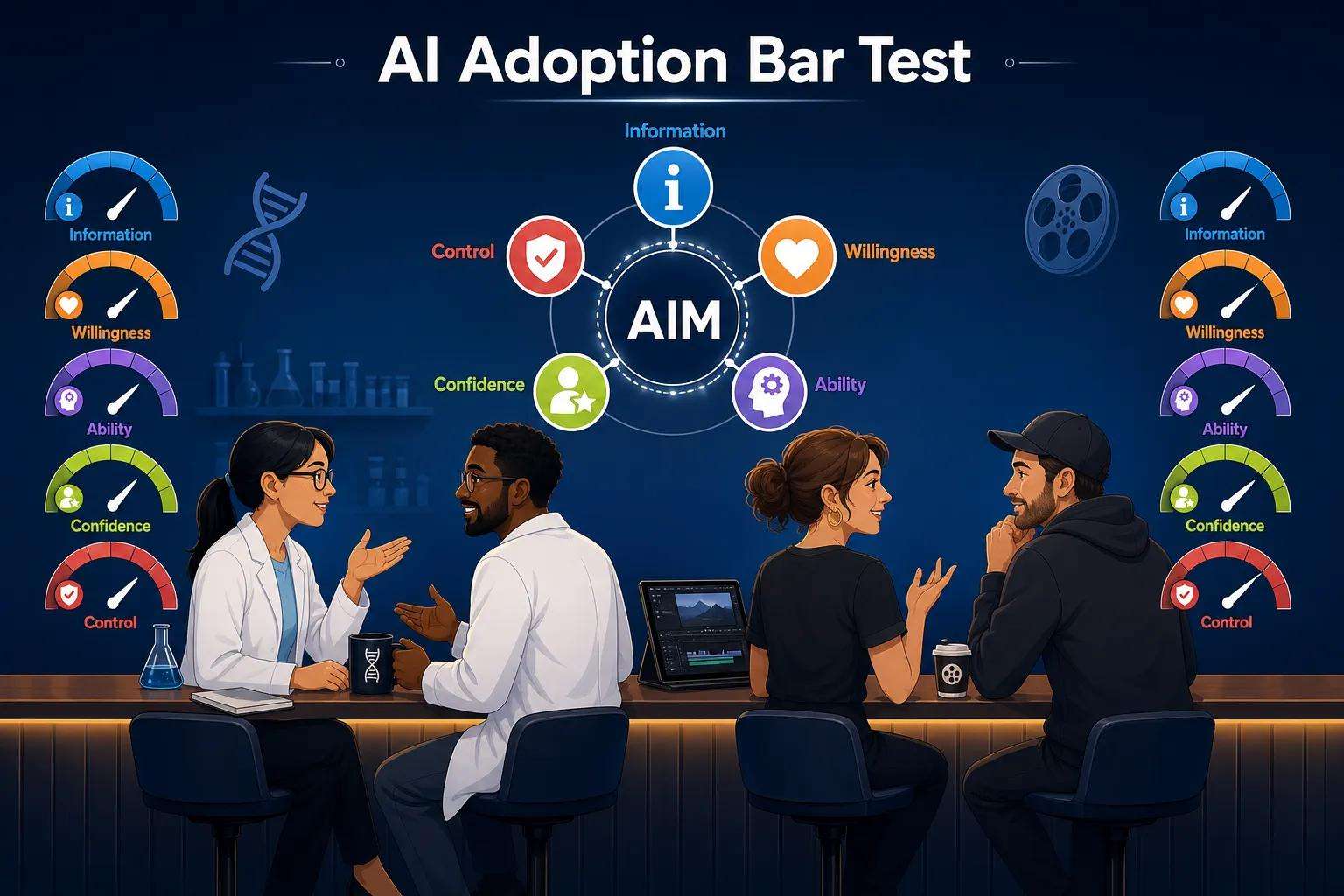
That's why a change management methodology like the Accelerating Implementation Methodology (AIM) is so valuable in transformational change. It provides a roadmap for overcoming these barriers in a logical, practical, and systemic way. Otherwise you will find yourself with program(s) and even hundreds of work streams with no process in place for addressing the cultural elements of the change!
Virtually every organization understands that project management is an essential component for implementing transformational change. Everyone knows the value of having processes in place for managing time, budget, and deliverables.
Yet there is still some resistance to making that same investment on the human elements of the transformation, despite the data that continues to show that at least 70% of these changes fail to achieve anticipated benefits, on time, on budget, and to spec.
If your organization is looking to implement transformational change in 2013, you will need some way to address the cultural barriers. If your organization has had past failed implementations, you will need to put even more resources in place to overcome your past history.
So let's talk about the benefits to a methodology that provides "project management for people."
1. Reduced risk of having the disruption of transformational change (and it is inherently highly disruptive) cause lower productivity, reduced quality, lower customer/patient satisfaction and poorer customer/patient outcomes
2. Higher likelihood of meeting all the measures of implementation success-- on time, on budget, all business, technical, and human objectives met
3. Ability to get the changes implemented at greater speed when you have capable change agents that have the requisite skills, knowledge and tools to address the cultural barriers.
4. Sponsors who are spending their valuable time doing on those activities that will drive the change instead of maintaining the status quo.
We all have likely experienced situations in our academic, personal, or professional lives where we have seen the power of a unifying focus. If you are going to invest in transformational change, it makes sense to have a process for driving the behavioral component of the change just as you need a process for driving the technical aspects of the change.
Your organization may choose to ignore the need for a methodology to address the human elements of the change, but know that there will be a price to be paid. It is a lot less expensive to align around a common definition of the transformation, build readiness, develop sponsorship, create reinforcements, build communications, and address cultural barriers prospectively rather than trying to fix problems later on.
How does your organization plan to manage transformational change in 2013?
What's the missing ingredient for so many transformational changes?
It's the simple but incredibly important failure to build in implementation-specific reinforcements for the transformation. Even though we talk about reinforcement all the time, and people nod their heads in acknowledgement about the need for reinforcement, it's consistently over-looked.
It's certainly one of the major barriers to project success! And it isn't that difficult to fix.
The question is, why is reinforcement ignored? Is it because there is still a fundamental belief that people will adopt the changes just because it's their job and there is no other option? Is it because leaders think that this is just "soft stuff" and isn't all that important? Is it because people still think we are only talking about compensation and stock options?
One of our clients last week told the following anecdote about how simple yet powerful reinforcement can be. This client is in a healthcare facility that was in the midst of an electronic medical records implementation. A top executive came by one of the departments with a cake he had purchased personally as a thank you for all the hard work. It wasn't planned. There wasn't an entourage of photographers to capture the moment. It was a sincere and powerful expression of appreciation. He cut and served the cake himself. And to this day, employees still talk about it!
This was a meaningful reward, and it cost very little! And equally important, this executive earned trust and loyalty that will pay off on future changes.
In another example, one of our clients was implementing a very large enterprise-wide technology change. The project manager set the stage for reinforcement early on by asking the team to answer some questions designed to understand what rewards would be meaningful for each individual:
- What's your favorite candy bar?
- What do you like to do outside of work?
- What's your favorite restaurant in town?
Based on the answers, this project manager set up a simple spreadsheet. When someone on the team worked extremely late, the next morning there was a personal hand-written note with a candy bar as a thank you. At the completion of important milestones, there were gift certificates for a dinner out.
In comparison to the investment the organization was making in the software and the integration, these costs were minimal. But the reinforcement was powerful, and it was in the Frame of Reference of the recipient.
Remember that implementation of transformational change takes place at the local level. It just makes sense that reinforcement of the transformational change takes place at the local level, too.
One of the major contributions that change agents can make is to help reinforcing sponsors to develop this menu of reinforcements that will be used specifically for this change. It's
one of the most important elements of good sponsor contracting. For some sponsors, spending time on reinforcement doesn't come naturally, but an effective change agent can make a real difference in the speed of adoption by helping sponsors apply meaningful reinforcements.
We know that people follow the reinforcement. It's a fundamental principle of human behavior. That's why Don Harrison tells clients that "every time you see a behavior there either is or was a reward for it." No behavior occurs in isolation.
You can use the Targeted Reinforcement Index, one of the AIM (Accelerating Implementation Methodology) tools, to help your sponsors identify which specific rewards will be meaningful for the Targets of the change.
It's worth the time, the effort, and the resources to plan a reinforcement strategy for your transformational change. Many of these reinforcements are simple, but powerful.
The budgeting season is upon us, and your organization may be planning resource requirements for transformational, enterprise-wide changes like shared services, acquisitions, one company, or customer-centric strategies.
It's a time when the vision of the organization is translated into operational plans and programs. As top leadership considers how best to gain competitive advantage, streamline costs, build shareholder value, and win the hearts and minds of customers, new strategies are defined. There’s no doubt that strategy development is critical, but what is strategy really except a series of programs and projects that must be implemented?
Implementation success for enterprise-wide change requires a predictable set of activities that must be accounted for from a budgeting perspective. Organizations can either budget sufficiently for these activities now, or pay the price later in stalled or failed implementations.
Investing in the Human Aspects of Enterprise-Wide Change
It’s common for organizations to focus on the budgets for the technology and business aspects of strategic implementation. Often, less emphasis is put on the resource
requirements and deliverables for the fully array of human elements of the implementation. This includes activities that are either overlooked or under-resourced, including building change agent capacity, building readiness for the change, securing full sponsorship, developing a reinforcement strategy, and building a communication plan.
Unfortunately, this can leave a project team woefully short of the budget needed in terms of the size of the project team, the number of change agents across the affected areas, and the time allocated to complete the project through to sustained adoption.
Instead, the budget is developed based on the premise that the project will be complete at the point of “go live”, rather than at the point that benefit realization is achieved. This creates a major barrier to success right from the start, because the budgeted goal is "installation" when the true end-goal should be "implementation."
Three Ways to Improve the Odds for Implementation Success
As strategy development becomes translated into operational budgets and plans, here are three actions that you can take to improve the odds for implementation success:
1. Budget for Implementation Capability Development
If the organization is investing in a new strategy, it’s common sense to make certain that the players have the knowledge and skills needed to implement the strategy.
For example, this means ensuring that sponsors are aware of how their own behavior will control the pace of the implementation. It means that change agents will need to have an understanding of the principles and tactics for building commitment (or compliance) to the change implementation. It means the change agents must have the skills and knowledge to effectively contract with sponsors.
Investing in implementation capability has short-term immediate value, and long-term benefit. The organization with implementation capabilty has an enormous competitive advantage.
2. Budget for Sufficient Resources for the Project Team and Change Agents
If the organization is investing in large-scale, complex transformational change, make certain that there are sufficient resources committed. Sponsors typically under-estimate what it takes to actually implement enterprise-wide change.
Implementation is a ferocious, resource-consuming activity. Teams consisting of large numbers of “partial resources” can be inefficient.
One way that authorizing sponsors visibly demonstrate their commitment to enterprise-wide change is how they allocate resources. If sufficient budgets haven't typically been allocated, this is an immediate and visible opportunity to demonstrate that this enterprise-wide change is different.
- Build a Timeline that Reflects the Implementation Activities and Deliverables Required for True Implementation Success
As the budget is built, consider that the project team infrastructure will need to remain in place until the goal of full implementation is achieved. By our definition, implementation is only deemed successful when it is on time, and on budget, with all business, technical and human objectives met. If you stop short and disband the project infrastructure at the point of “Go Live”, you are risking achieving benefit realization for your change.
By budgeting with the goal of Return on Investment in mind, your organization is far more likely to achieve the desired results for enterprise-wide change.
Is your organization's transformational change effort a sustained priority for your senior executives? Are you positioned for execution success?
A few years ago, we used to have our Introduction to AIM (our structured change management methodology for accelerating change) complete our Organization Stress Test-- one of the AIM diagnostic tools-- as part of the program. The Stress Test provides a quantified assessment of how much is going on in the organization at the same time. This is critical because "no change occurs in isolation-- it occurs in the context of all the other things going on at the same time."
We don't use the Stress Test as often now, because we already know that almost every organization has way too much going on! This is problematic, because when there are too many "priorities" you essentially have no priorities!
It's a major concern, especially when it comes to transformational change which extends over multiple years. This means that you will need sustained focus over a long period of time from your senior-level sponsors or your transformational change will be "dead in the water!"
Maintaining a strategic focus on the transformation is essential. Once the transformational change is designed, your executives have only accomplished about 15% of what needs to get done. The really hard work is the implementation-- and transformational change ferociously consumes resources.
If your sponsors have moved on to designing the next set of strategic imperatives before the transformational change is actually completed, your transformation is at risk. The transformation must be sustained as one of the top 2-3 priorities over the course of the change, which is going to take at least 3 years!
When Don Harrison, IMA's President, goes into a group of senior leaders that are contemplating transformational change, one of the first questions he asks is, "Are you prepared to make this your focus for the next 3-5 years? Because if you aren't prepared to do that, don't even start. You will just create more problems for the organization."
Senior leaders are well-served to follow this simple, but compelling advice if they are looking to implement transformational changes at speed and achieve execution success: Focus down to speed up.
Implementing transformational change is by definition, more complex and more challenging. You have to let go of your past, and leap to the future without a safety net!
Here are five tips that can assist in ensuring that you get the intended value realization for your transformational changes. As you will see from the tips below, sponsorship and reinforcement for transformational change are the keys to value realization!
1. Provide psychological cues that this is different.
Transformational change requires sponsors to demonstrate that this change is different from past changes. They must do this from the start by offering "psychological cues" that this change is different. For example, these cues may come from the way the change is communicated. If your executives always communicate via a town hall meeting, you will want to use a different delivery method. Bottomline: the sponsors can't simply say that "this is different" without demonstrating the differences via their own behaviors.
2. Provide your sponsors with education on what you will need from them, and measure their performance.
Most sponsors have never been given any training on what it takes to be a good sponsor. Sponsors should know that we are looking for them to do three very important things: express their commitment to change, model that commitment, and most importantly, reinforce that commitment day in and day out by providing positive reinforcement and negative consequences for the new ways-- and making it easier for people to do their job the new way than the old way. Measure their performance as sponsors of the transformation (IMA's Sponsor Assessment Tool does exactly that) and provide appropriate reinforcements.
3. Identify the "behaviors you seek to see" at both the program and workstream levels.
It's absolutely critical to have "implementation specific" measures for each workstream, and these must include business technical and human objectives for the transformation. These human behaviors answer the question, what would people be doing differently, and how would you know it if you saw it? If you don't flesh out the human objectives at the front-end, how will you know what new behaviors you are looking for targets of the change to adopt, and how will you reinforce those behaviors?
4. Make sure the transformation is sustained as one of the top 2-3 priorities and that there are realistic expectations from leaders on what radical change requires from them.
The transformation is more about what leaders are doing than anything else. Radical change can't just occur "out there." To implement at speed, leaders will have to make visible personal and painful sacrifices. For example, the leader who gives up his or her salary for a year demonstrates that type of sacrifice. If leaders throw other changes at the organization that take the focus away from the transformation, you won't get benefit realization.
5. Model the goals for the transformation in the way that you implement the transformation.
If you are trying to achieve "one company" you can't implement on the old silo-by-silo basis. You need a consistent framework for implementing (like the Accelerating Implementation Change Management methodology) so that you model what you are trying to implement in the way that you implement! If you don't, people will quickly see that this is more "same," with the expectation that "this too shall pass."
Sponsorship and reinforcement are the power levers for driving transformational change at speed. These tips are just the start!