describe the image

Subscribe by Email

Your email:

Browse by Tag

Follow Me

IMA's Implementing Organizational Changes at Speed Blog

Current Articles | RSS Feed RSS Feed

Transformational Change Sponsorship: What to Do When It's Weak


We say that sponsorship for transformational change is the single most important factor in achieving the five critical success metrics:

  • on time
  • on budget
  • all business, technical, and human objectives met

As change agents, we are sometimes confronted with the unfortunate reality that we lack the kind of visible, active sponsorship we need.  Remember that we are not looking for sponsors who merely offer "support"-- we need sponsors who actively express, model, and reinforce their commitment to the transformational change with their direct reports, thereby building the cascade of sponsors level by level

So what to do when faced with sponsors that are either unwilling or unable to do what you need?

Here are five actions you can take to overcome this barrier on your transformational change.  It will likely require a combination of all five of these actions if you are going to get any level of acceleration:

1.  Educate Your Sponsors

  • Offer your sponsors awareness training about what behaviors are expected (remember "express, model, and reinforce.") Many sponsors are simply not aware of what it takes to be a good sponsor!
  • Motivate your sponsors by providing reinforcements that align with motivation to change dialthese expectations and by "turning the motivation dial" toward creating a situation of discomfort or pain.  Even for sponsors, the motivation to implement must be stronger than the motivation to stay the same
  • Assess the performance of your sponsors of transformational change and tie that assessment to the performance management system
  • Contract with sponsors for what you need from them right now.  You will need different things from your sponsors at various points of the the transformational change.  Contracting is the framework (exchange of offers, wants and needs) of the discussions you have where you ask for what you need-- i.e.,"I need you to do these three things for the transformation..."

2.  Replace Your Sponsor Dependence

  • Build coalitions lower down in the organization with "reinforcing sponsors" that provide the energy required to motivate your sponsors to visibly demonstrate the actions you need

3.  Focus on Damage Control

  • Recognize the limitations of your situation, and ask yourself, "Given these limits, how do I get as much accomplished with what I have?"

4.  Build a Critical Mass of Champions for the Transformational Change

  • Be prepared that this is a useful tactic, but it takes a long time to build the numbers you will need to work from the middle-up
  • There can be physical limitations in terms of geographies that make this an even more difficult undertaking
  • Be aware of the political realities, especially if you are working in a risk-averse environment (you can use the Implementation History Assessment or Implementation Risk Forecast to determine if this is a barrier to change for your organization.)  If your culture is strongly risk-averse or one in which turf-guarding is prevalent, your sponsors will be focusing their energies on protecting themselves rather than being visible, active sponsors. 

5.  Have Patience

  • While a good change agent is by nature action-oriented, sometimes you need to have patience while you continue to do the other four recommended things
  • Wait for the sponsor to leave.  This may be an organizational reality for your transformational change

If you are a change agent faced with an imperfect environment, these actions combined together can provide you with the forward movement needed so that your change doesn't stall out.

  challenge_transformational_change_revsmallcta


Who Needs to Know Your Change Management Methodology?


How effective can a change management methodology be if only a few people are aware of it?

We raise this question because we often see clients who are working on large-scale, complex  transformational change but who only plan to educate a chosen few in the change management methodology.

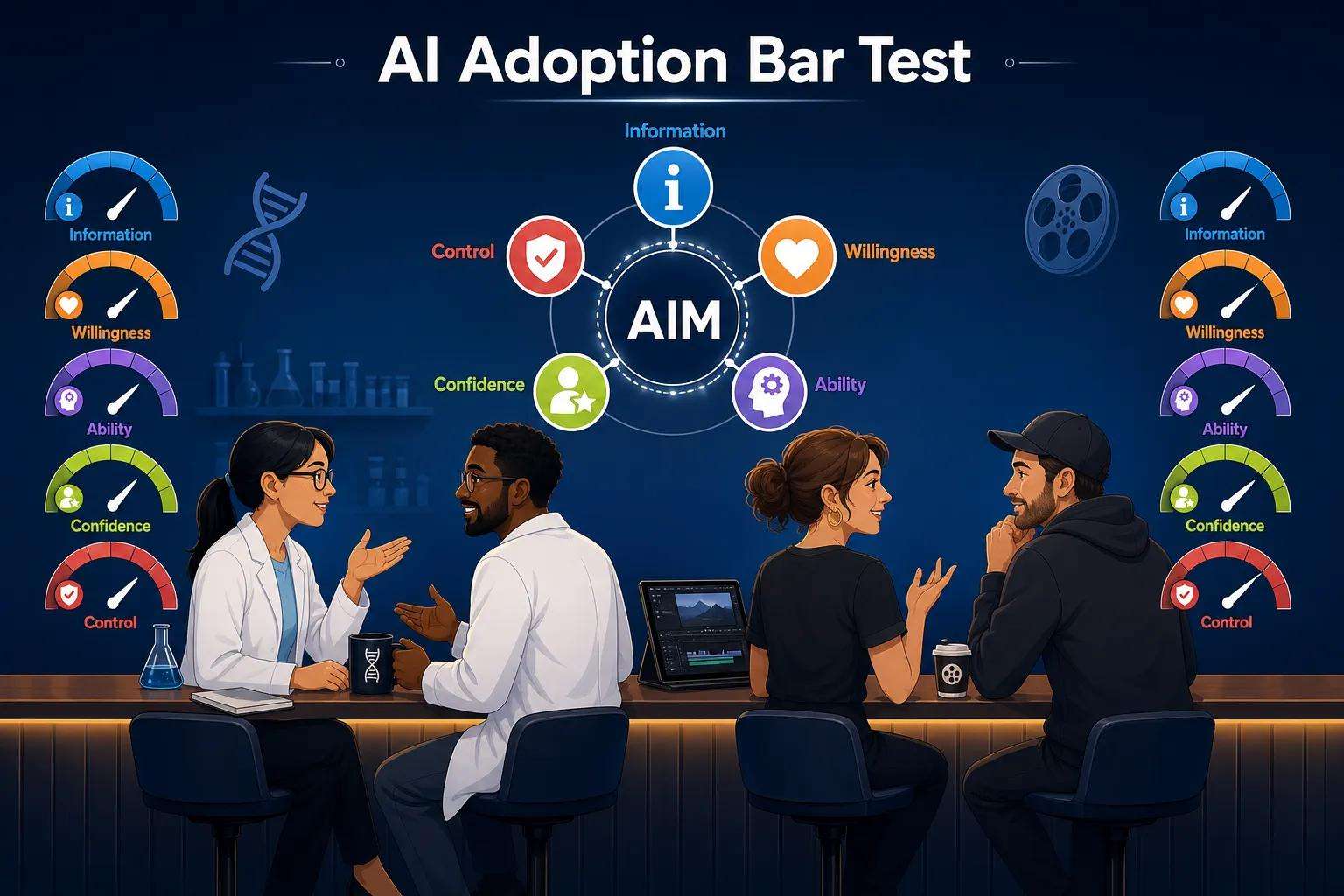
If the goal of a change management methodology is to have that methodology guide you on what to do, when to do it, and how to monitor if it is successful, it stands to reason that there are several audiences that need to have some level of awareness and education-- and inter-action with the methodology.  When we apply our proprietary Accelerating Implementation Methodology (AIM) on our clients' transformational and other types of change, we build a readiness plan that segments education 1) by role and 2) by what the audience needs to know and do in order to carry out that role. AIM Roadmap for Change

This is one element of what we mean when we say that the change management methodology should be applied in a "fit for purpose" way.

For example, we might breakdown the key stakeholder audiences as follows:

  • Executives
  • Senior Leadership Team
  • Directors
  • Managers
  • Agents, PMO, IT
  • Associates

Each of these audiences will differ in terms of how they will use and inter-act with AIM in terms of:

  • Knowledge of the implementation strategy and structure
  • Knowledge of the elements and principles of AIM
  • Knowledge about sponsorship
  • Knowledge about key deliverables such as the business case for action, key role map analysis, from-to analysis, and the identified human behaviors in the future state that must be reinforced for adoption of the change
  • Formal training required
  • Tactics for implementing

Taking this a step further, here is an example of what Senior Leadership Team members might need to be knowledgeable about regarding the implementation strategy and structure of a transformational change:

  • underlying assumptions
  • the business value of the transformational change
  • how the governance influences and interacts with their role

Managers might only need to be knowledgeable about:

  • how they will deploy the change
  • the rationale for the change

Regardless of the specifics, the point is that there are many audiences that need some level of awareness of your change management methodology from an applied perspective.  If your methodology only provides theoretical guidance but no operational direction, it will be of limited value in the real world of strategy execution.

fundamentals-of-webinar-512cta


The Business Case for a Change Management Methodology


Imagine you are a business leader weighing strategic options.  You evaluate the costs versus benefits of implementing a new enterprise-wide strategy that will build efficiencies, address global competition, improve the customer experience, re-structure operations, or reduce costs.  Whichever option or combination of options prospectively appear to drive the greatest financial return, you can protect that investment and significantly increase the likelihood you will be able to implement on time, on budget, and achieve all your objectives—all at a relatively small cost.  From a bottom line perspective, isn’t organization change management a “no-brainer?”

 Why Do Data-Based Leaders Ignore the Data?

There is a strong business case to be made for applying organization change management with articles about the financial benefits in business publications like McKinsey’s Quarterly.  There’s also plenty of dismal financial data about the success rate of implementations that would theoretically lead any rational leader to the same conclusion:

Organization change management is an essential component of any planned implementation.

Yet why is the data ignored so often by leaders who are data-driven in every other area of the business? 

We can only speculate that part of the reason is that many change management methodology approaches are just not “business-driven” and therefore, leaders don’t see the solutions as a relevant protocol in the same way that they view Lean/Six Sigma or even investing in organization change managementproject management.  

The inherent skepticism is reinforced by internal change agents who fail to focus their discussions with leaders on the three things that every leader or sponsor really is interested in:

  • Can I get this done faster?
  • Can I get it done better?
  • Can I get it done cheaper?

As change practitioners, we must be mindful of the Frame of Reference of leaders, and stop approaching them from our own perspective and speak in theirs.

How to Change the Mind-Set of Leaders

Given this reality, what can internal change agents do to shift the mindset of leaders?

1.  Implement a business-driven change management methodology (like AIM) that‘s practical and aligns with the language and objectives of leaders.  While this may sound self-serving, it’s a fact that leaders will respond more positively to a systematic, business-driven change approach with clear success metrics.

2.  Focus discussions on the need to build internal capability to implement, and offer a systematic plan for getting to that end-goal.  This makes up-skilling your change management capability an investment, rather than a cost.

3.  Use data as the foundation of your discussions with leaders whenever possible.  Data is the language of business!

4.  Apply a systematic “sponsor-contracting” process as the framework for your discussions, keeping in mind that “better, faster, cheaper” is the Frame of Reference of your leaders. Take out “soft” language like “I need your support” from your requests.

5.  Focus on the rationale of one change management methodology as a model for the desired end-state of the initiatives (i.e., if you are seeking to operate as “one company” based on best practices it just makes sense that applying one framework to get there will build efficiencies and speed.)

6.  Track the success rate of changes against the key metrics of on-time, on budget, all business, technical, and human objectives met.  Educate your leaders that the end-goal of strategic changes is “implementation,” not “installation.”

ivi


Limited Resources? Use Your Change Management Methodology As a Guide


In two different client conversations this week the same question came up-- how do you apply change management consulting with limited resources?  That can mean less time, fewer people, or insufficient financial support for what you are being asked to get done in your business change projects.

First of all, it's just a reality that you will never have the full complement of resources you need for your internal change management consulting.

But secondly, the goal of your change management consulting isn't to do the full change management methodology in a step-by-step fashion.  Your change management use change management methodology as a guidemethodology should guide you on what to do! 

So the goal of AIM (the Accelerating Implementation Methodology) isn't to do AIM but rather to have AIM guide you on what to do in a fit for purpose manner.  In other words, the principles guide your change management consulting on what you need to be doing to mitigate risks at the moment.

While the economic situation may be improving, it’s likely that you will be planning for getting more done with less.  From an implementation perspective, this means you’ll need to work smarter and target your resources in the most effective way possible.  Applying the principles and tools of the AIM change management methodology can guide you on what to do, given these limited resources.  

  • Tip #1- Use measurement to target your resources for maximum impact

If you have limited resources (and who doesn’t!) then you want to use them wisely.  You can use the Implementation History Assessment (IHA) to gain a systemic look at where you are likely to face common barriers like weak sponsorship, a risk-averse culture, or missing reinforcements.  Combine the IHA with the Implementation Risk Forecast (IRF), which measures the risks and barriers on your specific project.  Analyzed together, you’ll have a good idea of where you need to concentrate your time, energy and resources.  This will help you avoid a common implementation “speed bump”- change agents who are seduced by actions that are “safe” but have low impact.

  • Tip #2-  Make building the cascade of sponsorship your first priority

Whenever you are in a situation with limited resources, your first priority should be to ensure you are building the cascade of sponsorship you need.  When you have sponsors at each level of the organization that express, model and reinforce their commitment to the business change, you get acceleration.  Since active sponsorship represents a factor of 50% or more of the likelihood of implementation success, you should always make certain that you are asking for what you need from your Sponsors by using a well-planned sponsor-contracting process as the framework for your conversations. 

  • Tip#3- Develop an implementation plan that incorporates the core AIM deliverables

Investing some time and energy up-front to plan to develop a proper and robust implementation plan  (blended with the technical project plan) that’s continuously monitored will pay significant dividends.  Focus your plan based on the results of your IHA and IRF, with a strategic emphasis on Defining the Change, Generating Sponsorship, Developing Readiness, Building a Communication Plan, and Developing a Reinforcement Strategy.  These five AIM elements should be incorporated into any change management consulting implementation plan. 

  • Tip#4- Build readiness for your business change early to reduce the costs of managing resistance later.

Remember that whether your change is perceived as positive or negative, you will have resistance.  The best way to manage the resistance is to identify the potential sources of resistance early-on.  If you spend some of your resource energy early in the project life cycle on building readiness (and this requires more than top-down communications through email, a web-site, or similar common communication-plan elements that have no feedback loop) you’ll spend less time and need fewer resources dealing with resistance later.  The end-goal is adoption and behavior change, not the technical installation of the change.

If you follow these tips with your change management consulting, you’ll accelerate the implementation.. And getting your change completed more quickly reduces cost, and makes better us of your scarce and finite resources.

schedule-a-demo-cta

Shared Services: A Transformational Change or Pie in the Sky?


Shared services models continue to attract a lot of attention-- but like any transformational change shared services is fraught with the same types of challenges other "one company" solutions confront. 

What's especially surprising is that organizations attempt to implement a shared services model without a common implementation framework.  If you are "beginning with the end in mind" you must model the end-state in the way in which you implement.  That means that individual workstreams should be following a single best-practice change management methodology so there is one vocabulary, a common set of deliverables, etc. 

The "business case" for consolidating non-core functions into one centralized organization with streamlined processes is extremely attractive as a way to increase efficiency and reduce operating expenses.  Like other transformational changes, shared services is justshared services can be pie in the sky "pie in the sky" unless implemented with the end-goal of benefit realization, not just installation.  Since shared services is highly disruptive, you can anticipate lots of resistance to change and other significant barriers, including:

  • Poor scope or project definition-- what is in, what is out; changing role definitions; etc. for the shared services implementation
  • Poor implementation history leading to lack of faith in the ability of management to do what is necessary to pull the shared services implementation off for the long haul
  • Ineffective sponsorship for the shared services implementation; not a primary focus for senior leaders and the implementation is given lip-service but not the level of visible commitment required 
  • Weak motivation for the change.  Is this really about improving service levels or just another cost-containment strategy?
  • Lack of cultural fit (culture is extremely powerful, so if the shared services implementation is inconsistent with the culture, the culture will win!)  For example, is there a culture where leaders are reinforced for protecting their turf or is the culture risk-averse?  If so, shared services will be counter to your culture
  • Ineffective communication planning for the shared services implementation (substance, variety of delivery methods, messages targeted to audience versus top-down communications one size fits all)
  • Reinforcements that are aligned with the old operating model

Here are some things to be aware of from a shared services implementation perspective:
1.  You can expect to have a lot of resistance to the business change, even if it is entirely logical from a business perspective. This will be especially true in the ranks of middle managers and directors who will be giving up their power base

2.  For many organizations, it is extremely challenging to implement across the organizational structure's vertical columns and overcome the existing power structures-- it is the paradox of enterprise-wide change

To be successful in implementing a shared services model, you must have:

1.  A well-defined business case for action that clearly lays out the motivation for this change, and what it will mean (from....to, anticipated impacts) for each of the target audiences

2.  Clear performance measures for service levels and a process in place for ongoing measurement.  The more often you measure, with implementation-specific reinforcements attached, the faster you can go

3. A plan for building the required sponsorship in all the areas impacted by the shared services implementation

4. A communication strategy that relies heavily on face-to-face communication, with messaging designed in the "frame of reference" for targets of the shared services implementation

5. Reinforcements that are aligned with the desired business outcomes and behavior change, including reinforcing senior level sponsors for shared versus individual outcomes

The "human side" of shared services implementations are complex, so there is great value in having a single vocabulary and implementation method like the AIM (Accelerating Implementation Methodology) that serves as the foundation of the implementation.

download-our-whitepaper

Change Management Consulting: The Role of Change Leader


What falls under the change leader job description in best practice change management consulting?

Here's a role description we use in our own change management consulting where we are applying the Accelerating Implementation Methodology (AIM) to complex, large-scale changes in our client organizations:

1.  Create and maintain an updated AIM-based program-level implementation plan.

2.  Increase the capacity of the organization to implement change.

This includes:

  • Building and maintaining program sponsorship. As a change leader, your change management consulting should be focused on building the cascade of reinforcing sponsors at each management level. The acceleration power is in the cascade of commitment the change leader develops through a structured sponsor contracting process.
  • Developing agent capacity.  The network of change agents must have the right skills, traits, and characteristics. You must also be certain you have the right numbers, in the right places.  The best way to determine this is through key role mapping-- one of the most critical deliverables of the change management consulting process.
  • Improving target readiness.  The change leader must have have a plan in place to identify the sources of resistance, manage the resistance, and build readiness through pro-active strategies like involvement.

3.  Provide AIM change management consulting and support to both sponsors and agents.  This should include a targeted education and awareness-building plan that is fit for purpose for each audience.  It's not enough to just educate the change agents; sponsors need education as well so that they are aware of the critical role they play in expressing, modeling, and reinforcing the change.

4.  Assure that project work plans and change implementation plans are integrated, both vertically and program-wide.  Change plans should not be bolted on or run in parallel to the technical project plan--Blended Change Management and Project Management

5.  Assess and then communicate implementation risks to the steering committee in a timely and direct fashion.  Note that it is extremely useful if the steering committee has a strategic awareness of the elements of the change management methodology from a leadership perspective-- how do the human, cultural and organizational elements of the change affect the speed and likelihood of value realization for projects?

6.  Develop and deploy strategies to address program-wide implementation risks/themes/issues.  The change leader must have a grasp of implementation risks given the inter-dependencies of the projects, and deploy strategies to overcome barriers to change.  These barriers to change are dynamic so the AIM "risk dashboard" is the test-ground for identifying what is happening right now and what actions need to be taken.  The change management practices can't be a "check the box" activity-- you are never done generating sponsorship, building readiness, developing communication, or building reinforcements until you achieve all the business, technical, and human objectives for the change.

7.  "Be the Change."  The change leader must visibly and consistently demonstrate the behaviors that are consistent with the future state.

leading-people-thr-bus-change-rev-512cta

Reinforcing Transformational Change: Make The New Way Easy


One of the major dilemmas of transformational change is how to get people to adopt the new behaviors. How do you reinforce the change?

It was interesting to note, then, that one of the research conclusions that Richard H. Thaler stated in his July 8 New York Times' article on "Watching Behavior Before Writing the Rules" was this simple, yet profound guideline:

"If you want to encourage some activity, make it easy."

While Professor Thaler was specifically referring to getting people to adopt governmental policies, this is certainly also true of transformational change. While we talk often about the need to apply positive and negative consequences immediately following observed behaviors, we often overlook the power in making it easy for people to follow the new wayfork in the road

You can't expect people to be motivated to make the leap to the unknown (the pain of uncertainty is greater than the certainty of pain) unless there is a strong motivation to do things in the new way.  As we say, "The motivation to leave the present state has to be greater than the motivation to stay the same."

Thaler noted in his article that following this mantra has "guided many of our most successful interventions."  If the new process or new technology is much more difficult than the old way, especially at the beginning, it will be much more difficult to get sustained adoption at speed. 

If you're a change agent working on a transformational change, what can you do to make it easier to do things the new way?  For example, can you:

  • provide clearly written job aids written from the Frame of Reference of the performer that make it easy to follow a new process?
  • offer lots of practice opportunities to use a new system before it goes live?
  • sequence the change so there aren't multiple changes hitting the same Targets at the same time?  Heat maps are a great tool for identifying opportunities for better sequencing.

Change agents charged with implementing transformational changes will also benefit by paying attention to Professor Thaler's second piece of advice:  people are far more likely "to comply with a social norm if they know that most other people are complying." 

So if, for example, you can let people know that "75% of the employees affected by this change" are already on board, you will encourage the others to join their colleagues. 

To promote the migration from the old behaviors to the new behaviors for your transformational change focus on these basic principles of the Accelerating Implementation Methodology (AIM):

  • decrease rewards for old; increase rewards for new
  • increase consequences for old; decrease any consequences for new
  • increase the level of effort for the old; decrease the level of effort for the new

Make it easy, and you are far more likely to be get sustained adoption of your transformational change.

successgrader-cta

Resistance to Transformational Change: Not Necessarily Bad


Have you ever thought that resistance to transformational change might actually be a sign of organizational health

If you are involved in transformational change right now you are likely thinking, "Our organization is very, very healthy then!"

It's true.  One of the most provocative comments that Don Harrison made in the recent Don Harrison photowebinar on "Tips for Managing Resistance to Change" is that resistance to change is part of the natural change process, and that if you don't see resistance one of two things is going on:

1.  Nobody's changing

2. The resistance has been driven underground

Don noted that resistance to change is one of the most mis-understood concepts in management today.  It's not necessarily good or bad--

Resistance to Change Is:

Inevitable

A natural function of change

Manageable

An attempt to protect the individual Frame of Reference

A sign that you have touched on something important

A sign that the potential for change exists

A sign of controlling the change process

A learning process

Resistance to Change Is Not:

Necessarily logical

A sign of disloyalty

Something to overcome or combat

Aimed at you to be taken personally

Designed to discredit your competence

Indicative of poor performance

A sign that the change process is out of control

The resistance is actually essential for your change.  An "engaged" organization isn't resistance-free; it's resistance-laden

If you are looking to drive innovation into the organization you must anticipate and look for resistance.  Innovation and resistance are two-sides of the same coin.  They are part of the same process.

While, as Don suggests, many leaders seek the type of "engagement" where employees follow the same path as "lemings to the sea," innovation is contingent on resistance.  Given that resistance to change is a function of disruption, you can't possibly have transformational change and innovation without resistance. 

We need to de-personalize our feelings about resistance. No behavior change, no transformational change.  No resistance, no behavior change, either.

Instead of driving the resistance underground by trying to meet it with force, we should go to the resistance early and identify the sources of the resistance.  What exactly are the sources of resistance, from the Frames of Reference of the Targets of the change? How do the Targets perceive the following:

  • What's the amount of personal work pressure and stress the transformational change will cause?
  • How successful were past implementations?
  • Are there adequate organizational supports and resources for the change?
  • Will it cause significant disruption to work life?
  • Am I clear about what is expected of me?
  • Will it impact my personal power or others'?
  • Will habits and routines be disrupted?
  • Will it change the characteristics of my job?
  • Is the transformational change compatible with organizational values?
  • Is there a high personal cost for the change?

Once we understand it, we can employ strategies and tactics to manage the resistance so that it doesn't slow the transformational change down.

free-consultation-with-dh-cta

Tips for Integrating Change Management Consulting Into Projects


While many organizations include some of the necessary people-side project management deliverables some of the time, it’s not a consistently-applied change management consulting process.  As a result, implementation success is spotty.  While attempts are made to either “bolt on” a human “change management” plan at the end of the technical plan, or to run a human plan in parallel, the best practice is a blended plan.

Tips for Developing an Integrated Change Management Consulting Plan

At a minimum, the blended plan should include the following elements and deliverables of the Accelerated Implementation Methodology (AIM) change management methodology:

Defining the Change:

How will we develop a common definition of the change, and how will we identify the new behaviors we seek to see in the future state in observable, measurable terms?  The first deliverable is a clear and compelling Business Case for Action that should be developed very early in the project lifecycle. The Business Case for Action answers these questions:

  • What are we changing?
  • Why are we changing? 
  • What happens if we don’t succeed?

Tip:  This change definition needs to be translated into the Frames of Reference for the various target groups so that it is positioned from their perspectives, not from the perspective of management.  A solid change definition provides the foundation for building organizational alignment around a common definition of the change.

The Sponsorship Strategy:

A robust key role map is one of the most valuable AIM deliverables and is integral to the Sponsorship strategy.  The key role map is more than just a general stakeholder analysis; it is a visual depiction of the precise organizational location of Authorizing Sponsors, Reinforcing Sponsors, Change Agents, and Targets of the change.  While it may take several weeks of change management consulting to develop a good key role map, it is an invaluable tool and provides the project team with significant insights into what level of resources will be needed to develop a cascading network of Reinforcing Sponsors at the local implementation level of the organization.

Tip:  Use the key role map to identify where you will need sponsors.  Remember that every resource must be sponsored.  That means every change agent must have Sponsorship.

The Readiness Strategy:

The AIM Individual Readiness Assessment tool helps the project team identify the likely sources of resistance so that tactics and strategies can be deployed to shorten the duration and depth of the resistance.  The data enables the team, Change Agents, and Sponsors to IMA Individual Readiness Assessmentunderstand how the change is perceived from the Frame of Reference of the Targets.  A Readiness Strategy should be built into the project plan as a way to measure the progress of adoption of new behaviors.

Tip:   Building readiness is not a check-the-box activity.  The sources of resistance will be different at the beginning, middle and end of the project, so you will need to deploy different strategies and tactics.  For longer projects, you will likely need to conduct the Readiness Assessment more than once. 

The Reinforcement Strategy:

Every best practice project plan should include a Reinforcement Strategy that helps Sponsors and Change Agents apply immediate and certain behavioral reinforcement at the local level for the implementation-specific behaviors we seek to see for that change.  The “menu” of formal and informal reinforcements should be developed from the Frame of Reference of the Targets.  Note that the formal performance appraisal process is insufficient because it is too infrequent.

Tip:  The more often you measure the new behaviors you are seeking, with positive and negative consequences attached, the faster you will achieve adoption of the changes.  If there is no behavior change, there is no change--and reinforcement is the driver of the behavior change!

The Communications Plan:

Many project plans do include a Communications Plan, but the plans are focused on top-down information sharing with no opportunity for feedback from the message recipients.  The Communications Plan should use a variety of delivery vehicles and varying messages that take into account the Targets’ Frames of Reference. 

Tip:  Communications is not just a top-down activity.  Every message should include a “feedback loop” for gathering information that is fed back to the team, Sponsors, and Change Agents.  This feedback loop is essential for identifying the sources of resistance to the change.

Each of these important elements and deliverables is addressed by our change management consulting using the AIM change management Methodology.  By following the principles of AIM in your next project plan, you can dramatically increase your probability of implementation success.

download-our-whitepaper

All Posts